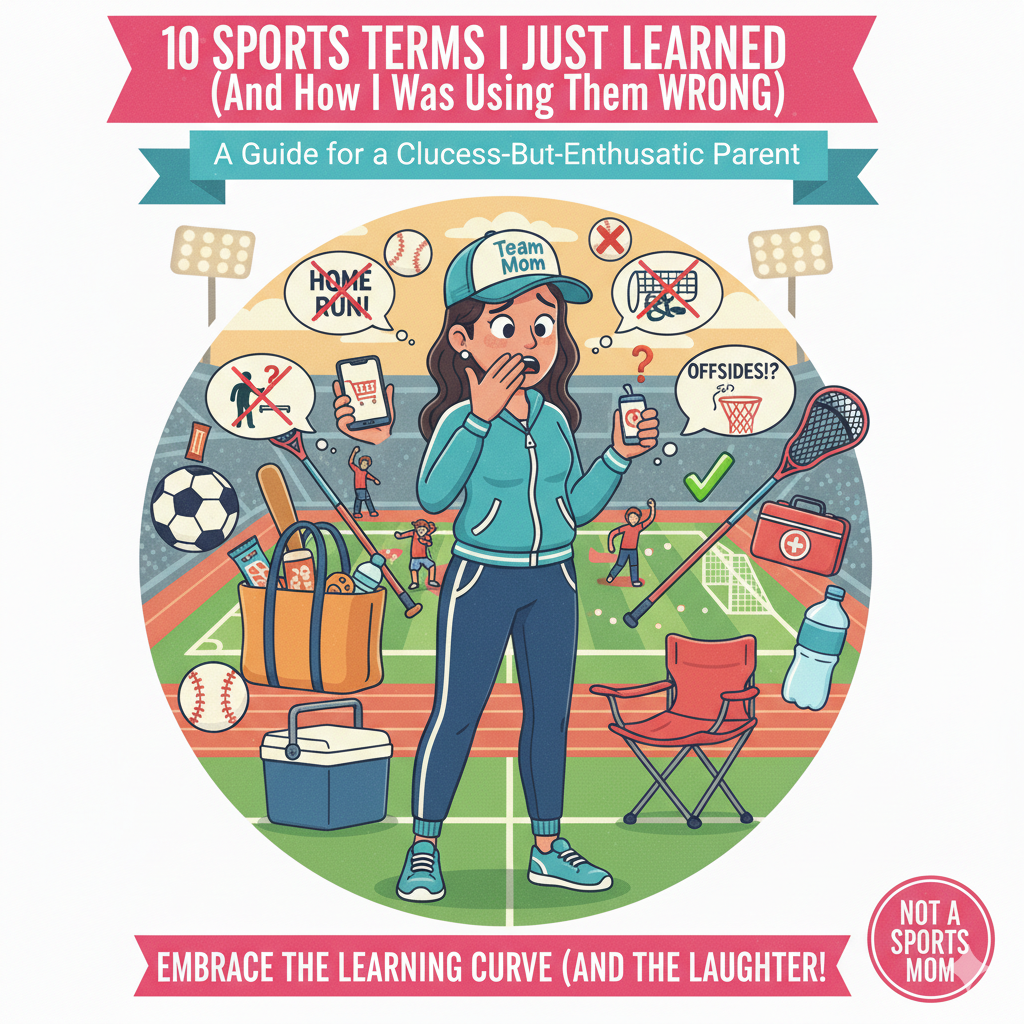
I thought I had a decent handle on sports.
Not like… expert-level. But enough to clap at the right times and nod confidently when other parents said things like “great play.”
And then my kid started actually understanding the game.
Which is when I realized… I had been using almost every sports term incorrectly for years. Not slightly wrong.Fully, confidently wrong.
The kind of wrong where your kid looks at you like, “I love you, but please stop talking.”.
This post contains affiliate links. That means I may earn a small commission (at no extra cost to you) if you choose to purchase through them. I only share products we’ve used, loved, or genuinely found helpful in our own sports journey.
The Moment I Knew I Was in Trouble. We were at a game — one of those slightly chaotic, early-season ones where everyone is still figuring things out.
I made what I thought was a very supportive, very normal comment:
“Wow, great goal!”
It was not a goal.
It was… something else. Something important. Something my child immediately corrected me on with the authority of someone who has watched three YouTube videos and now considers themselves an expert.
That’s when I knew: I was going to have to learn sports… from my kid. Honestly, I’ve been learning as I go — which is basically how this whole journey started. If you’re new to this too, I shared more about that in my Beginner’s Guide for Parents Who Don’t Know Much About Sports (because I truly did not come into this with a game plan).
1. “Offside”
What I thought it meant:
Someone was… off to the side?
What it actually means:
There are rules. Lines. Timing. None of which I fully understand, but I now respect deeply. I used to say things like, “He was just standing there!”
Apparently, that is the problem.
2. “Assist”
What I thought it meant:
Someone helped a little.
What it actually means:
A very important, stat-worthy contribution that I absolutely should have been recognizing.
Now I overcorrect and yell things like,
“Great assist!!”
even when I’m not 100% sure one happened.
3. “Hat Trick”
What I thought it meant:
Something involving an actual hat.
What it actually means:
Three goals. Same player. Big deal.
I once asked where the hat was.
No one answered me.
4. “Power Play”
What I thought it meant:
Someone was doing really well.
What it actually means:
There’s a penalty situation and one team has an advantage. Now I just say, “Oh wow, this is big,” and hope for the best.
5. “Faceoff”
What I thought it meant:
A confrontation. Possibly emotional.
What it actually means:
A very structured start to play.
I used to say, “Uh oh, here we go,” like something dramatic was about to happen. Now I know… it is just the beginning.
6. “Cleats vs. Sneakers”
What I thought it meant:
Shoes are shoes.
What it actually means:
They are absolutely not interchangeable and you will know this five minutes before practice.
This is how I ended up panic-ordering proper gear mid-season.
soccer cleats and shin guards/socks. Lesson learned. This was also the moment I realized I needed an actual system for sports gear — not just throwing things in the backseat and hoping for the best. I ended up putting together a simple approach that has saved us more than once in my Essential Tips for Youth Sports Parents.
7. “Warm-Ups”
What I thought it meant:
Optional. Casual. Light stretching.
What it actually means:
Essential. Structured. Something my child takes very seriously.
We now have a whole pre-game routine that includes stretching, running, and occasionally using things at home like a small setup to burn energy before games.
8. “Practice Gear vs. Game Gear”
What I thought it meant:
Same bag. Same stuff. Grab and go.
What it actually means:
Different everything.
This is how we ended up with multiple bags — one for each sport — because apparently mixing them causes chaos. A soccer bag and a duffle bag/hockey bag.
Now I just keep them packed at all times and hope for the best. If you’ve ever shown up with the wrong bag (or no bag), you already know why this matters. I go way more into how we organize everything — without overcomplicating it — in my Youth Sports Tips for Parents.
9. “Hydration Break”
What I thought it meant:
A quick sip of water.
What it actually means:
A full emotional reset.
Snacks, water, regrouping, sometimes a full personality shift.
We do not leave the house without backup snacks anymore.
kid water bottle
Snack cooler
Zbar / applesauce / yogurt pouches
Because a hungry athlete is… not someone you want to negotiate with. This is also where I learned that being even slightly unprepared can completely derail the day. Snacks, water, backup everything — it all matters more than I expected. I break down exactly what we keep on hand in my Sports Parent Survival Tips.
10. “Sideline Behavior”
What I thought it meant:
Sit and watch quietly.
What it actually means:
A full experience.
You’re cheering, reacting, trying to follow along, and occasionally Googling things mid-game while pretending you’re checking a text.
I now come prepared.
A chair
portable phone charger
sanitizing wipes
Because if I’m going to be confused, I’m at least going to be comfortable.
If you’re also figuring this out as you go, you’re not alone. I’ve been sharing more of the real-life lessons (and mistakes) over in my Tips section, where I break things down in a way that actually makes sense for beginners.
What I’ve Learned (Besides the Terms)
Here’s the thing.
I still don’t know everything. Not even close.
I still whisper Google searches during games.
I still clap at questionable moments.
I still nod like I understand more than I do.
But I’m learning.
And more importantly — my kid doesn’t care that I don’t know everything.
They just care that I’m there.
Cheering. Showing up. Trying.
Even if I call something a goal when it’s definitely not.
The Real Win
This whole “sports mom learning curve” isn’t about getting every term right.
It’s about:
Showing up
Letting your kid teach you
Laughing at yourself
And slowly, accidentally… learning along the way
Because one day you’ll say something correctly and your kid will go:
“Yeah, that’s right.”
And honestly?
That feels like a win.
And if you’re just getting started with youth sports and feel completely lost (same), I highly recommend starting here:
👉 Beginner’s Guide for Parents Who Don’t Know Much About Sports
👉 Essential Tips for Youth Sports Parents
Tell Me I’m Not Alone
Please tell me I’m not the only one learning sports terms in real time.
What’s a sports term you recently learned (or confidently used wrong for way too long)?
Drop it in the comments — I need to know I’m in good company.
SEO Notes (already baked in)
This post naturally includes:
funny mom blog
beginner sports terms
sports mom learning
youth sports parenting
Leave a Reply