Category: Sports

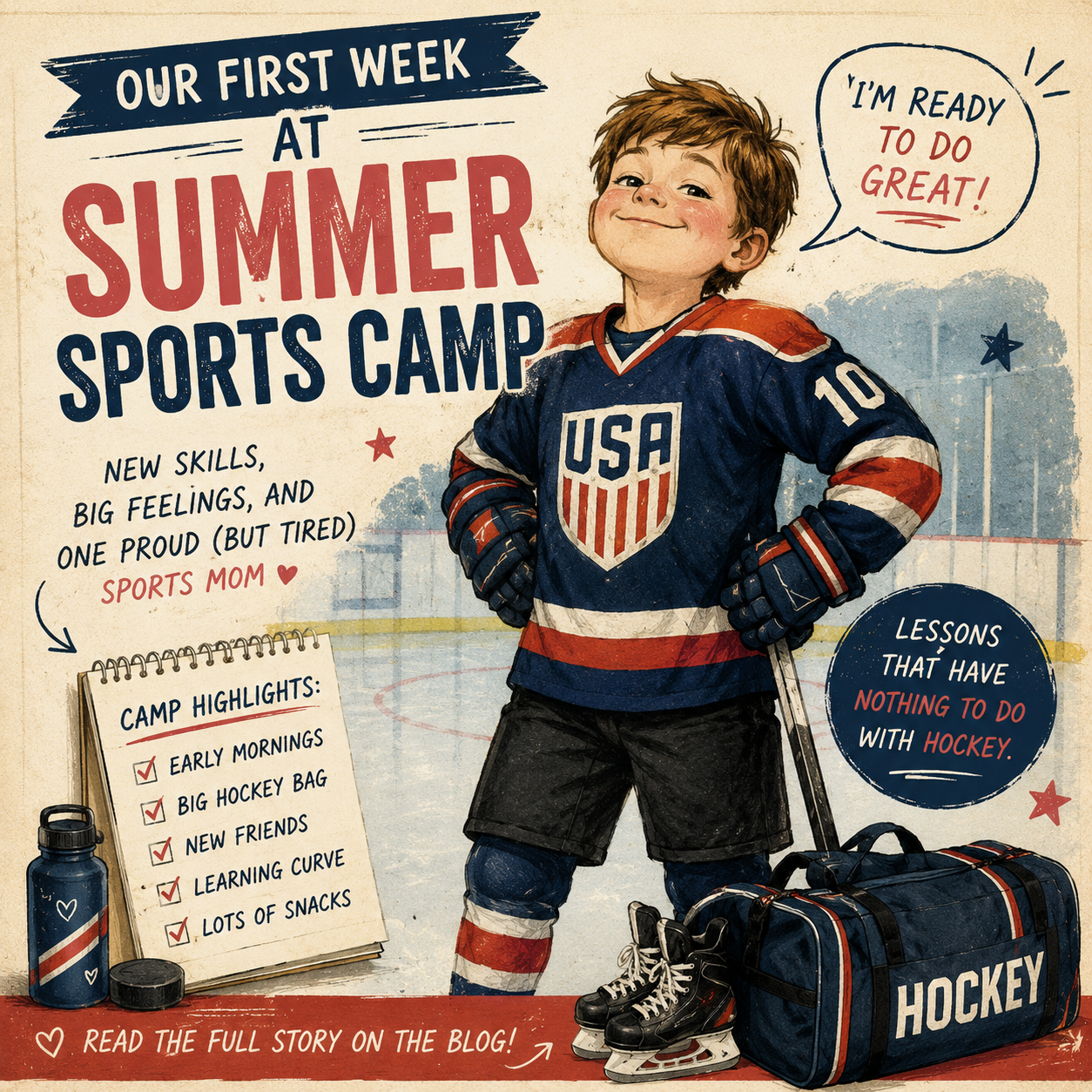
  • Our First Week at Summer Sports Camp

    Our First Week at Summer Sports Camp

    What Went Right, What Went Wrong, and What I Wish I’d Known


    Disclosure: This post contains affiliate links. If you purchase through these links, I may earn a small commission at no additional cost to you.


    When summer sports camp registration opened, my son was all in.

    This wasn’t just any camp.

    This was ice skating camp.

    The first step on his journey to becoming a hockey player.

    At least in his mind.

    He’s been talking about hockey for months. He owns a Mighty Ducks jersey. He watches hockey clips. He practices in the driveway. If confidence alone could get you drafted, he’d already have a professional contract.

    So when I told him he was going to hockey camp, he was equal parts excited, nervous, and anxious.

    Mostly excited that there was no school.

    As far as he was concerned, camp meant spending all day having fun.

    As far as I was concerned, camp meant surviving the packing list.


    The Packing List That Nearly Defeated Me

    A few days before camp, we got the official list.

    I looked it over once.

    Then I looked it over again.

    Then I started gathering supplies.

    By the time I finished packing, I was pretty sure we could survive a long weekend in the wilderness.

    Inside his bag:

    Skates

    Helmet

    ✔ Hockey jersey

    ✔ Cold-weather clothes for the ice rink

    ✔ Extra clothes

    Swimsuit

    Towel

    Sunscreen

    Water bottle

    Snacks

    More snacks

    ✔ Things I can’t even remember anymore

    I honestly think the camp bag was fuller than the bag we took on our last family trip.

    The funny part?

    The things I worried about weren’t the things that ended up mattering.


    Day One: Confidence Levels Were High

    Drop-off went surprisingly well.

    No tears.

    No hesitation.

    No dramatic goodbye.

    He practically sprinted into camp.

    I stood there wondering if I should be emotional.

    Meanwhile, he was already gone.

    That’s when I realized something important:

    Kids adapt a lot faster than parents do.


    What I Wasn’t Prepared For

    I knew he’d be skating.

    I knew he’d be active.

    I knew he’d be learning new skills.

    What I wasn’t prepared for was how absolutely exhausted he would be.

    Every afternoon looked the same.

    He’d climb into the car.

    Tell me camp was amazing.

    Eat approximately half the groceries in our house.

    Then immediately become the world’s most tired five-year-old.

    The exhaustion hit hard.

    And with exhaustion came something else.

    Frustration.


    The Hard Part Nobody Talks About

    My son likes being good at things.

    Don’t we all?

    The problem is that in his mind, he wasn’t joining a beginner skating camp.

    He was already a hockey player.

    After all, he owns a Mighty Ducks jersey.

    That’s practically professional-level experience.

    At least according to him.

    The reality was a little different.

    There were skills he didn’t know yet.

    Techniques he’d never tried.

    Kids who had skated longer than he had.

    And for the first time, he started realizing that wanting to be good at something and actually being good at it are two very different things.

    That realization led to some tough conversations.

    There were moments when he got frustrated.

    Moments when he wanted things to come easier.

    Moments when he wondered why other kids seemed better.

    As parents, those moments are hard to watch.

    You want to fix it.

    You want to tell them they’re amazing.

    You want to make the disappointment disappear.

    But sometimes growth happens right in the middle of those uncomfortable feelings.


    The Wins That Didn’t Show Up on the Ice

    By the end of the week, his skating had improved.

    That part was obvious.

    But the biggest victories weren’t about skating.

    He learned how to keep trying when something felt hard.

    He learned that mistakes don’t mean failure.

    He learned how to work with teammates.

    He made new friends.

    He learned that everyone starts somewhere.

    And maybe most importantly, he learned that being the best isn’t the only thing that matters.

    Now don’t get me wrong.

    He’s still almost six.

    There were definitely moments when he wanted to be the best.

    There were moments when losing felt unfair.

    There were moments when his confidence was a little bigger than his current skill level.

    But that’s part of being a kid.

    And honestly?

    That’s part of learning.


    What I’d Do Differently Next Time

    If I could go back and talk to myself before camp started, here’s what I’d say:

    Pack the snacks.

    Bring the water bottle.

    Label everything.

    But most importantly?

    Prepare for the emotions.

    Because sports camp isn’t just about learning a sport.

    It’s about learning confidence.

    Patience.

    Perseverance.

    Teamwork.

    And sometimes learning that you won’t master something on the first try.


    What Went Right

    ✔ He had fun.

    ✔ He made friends.

    ✔ He learned new skills.

    ✔ He gained confidence.

    ✔ He wanted to go back every day.


    What Went Wrong

    ✔ I underestimated how tired he’d be.

    ✔ I underestimated how emotional learning something new can feel.

    ✔ I thought the challenge would be packing the bag.

    Turns out the challenge was helping him navigate disappointment and frustration when things didn’t come easy.


    What I Learned

    At the beginning of the week, I thought hockey camp was about skating.

    By the end of the week, I realized it was about something much bigger.

    It was about watching my son do something hard.

    Watching him struggle.

    Watching him improve.

    Watching him keep going.

    And honestly, I couldn’t have been prouder.

    Not because he became the best skater.

    Not because he won anything.

    Not because he mastered every skill.

    But because he showed up every day and tried.

    For a kid who’s almost six, that’s a pretty big win.


    Keep Reading

    👉 The Sports Mom Survival Kit

    👉 Essential Tips for Youth Sports Parents

    👉 The First Time My Son Went Fishing (And Apparently Became a Professional Overnight)

    👉 How We Accidentally Became a Golf Family

    👉 At-Home Sports, Backyard Chaos, and the Ones That Actually Tire My Kid Out


    Tell Me

    What’s something your child tried that was harder than they expected?

    I’d love to hear your stories because I have a feeling we’re all figuring this out together.
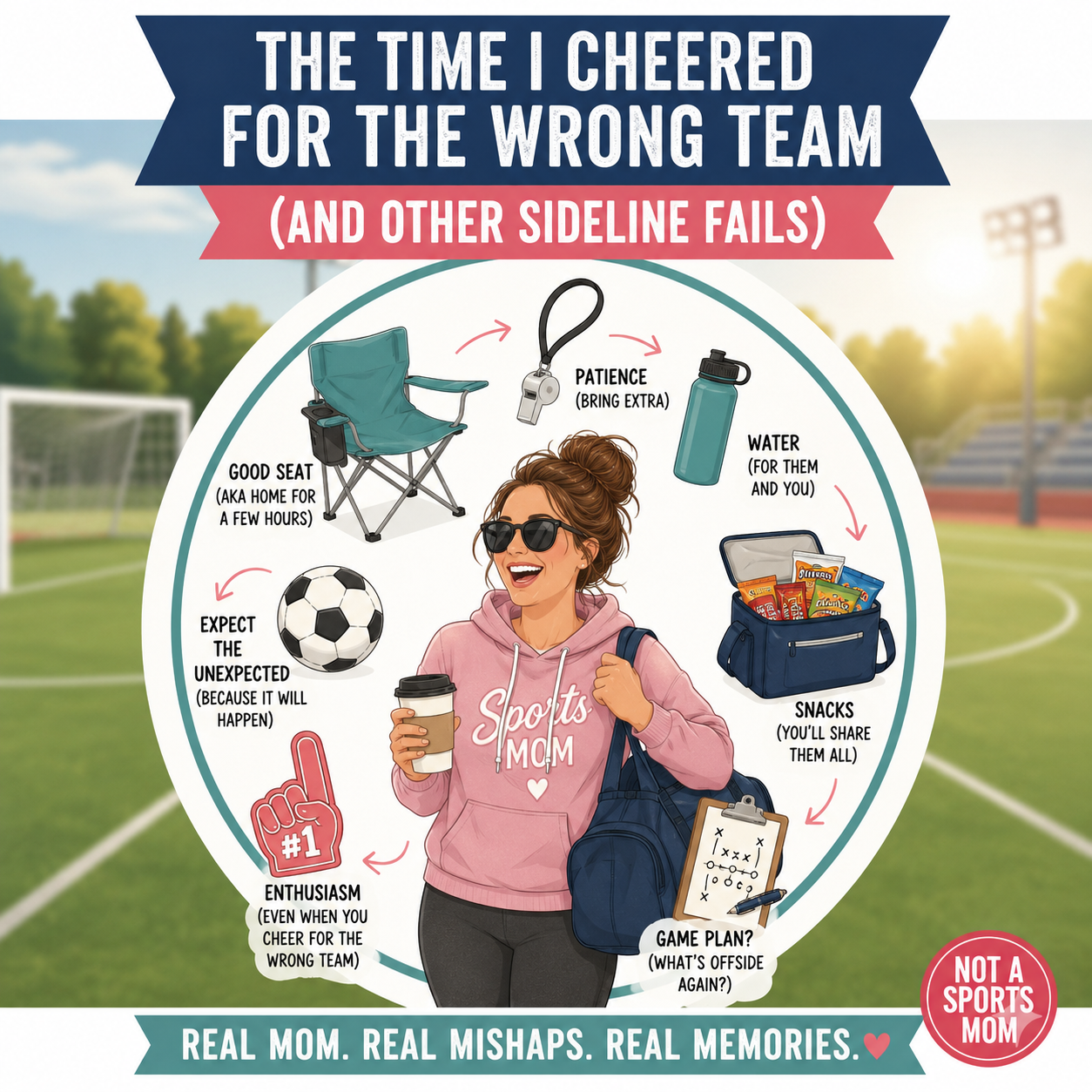
  • “The Time I Cheered for the Wrong Team (And Other Sideline Fails)”

    “The Time I Cheered for the Wrong Team (And Other Sideline Fails)”

    Disclosure: This post contains affiliate links. If you purchase through these links, I may earn a small commission at no extra cost to you. I only recommend products we actually use, love, or would genuinely buy ourselves.


    I knew becoming a sports mom would involve learning new things.

    I expected to learn soccer rules. I expected to learn hockey terminology. I expected to eventually understand why golf requires an entire garage full of equipment just to hit a tiny ball.

    What I didn’t expect was how often I would embarrass myself in public.

    Because here’s the thing nobody tells you about youth sports:

    The kids aren’t the only beginners.

    Some of us parents are out there learning too.

    And unlike the kids, our mistakes usually happen in front of dozens of other adults.

    The kids get to learn privately at practice.

    We get to learn publicly while sitting in folding chairs holding coffee.

    And if you’ve ever accidentally sat in the wrong section, grabbed the wrong water bottle, or enthusiastically cheered for the wrong team, then welcome. You’re my people.


    The Ultimate Sideline Fail:
    The Day It Happened

    The most embarrassing moment happened during one of my son’s early games.

    This was back when every kid looked exactly the same to me. Tiny, fast, and wearing nearly identical jerseys. I could identify my own child about 80 percent of the time, which honestly felt like a passing grade.

    I had arrived prepared that day.

    I had my chair.

    I had snacks.

    I had coffee.

    I felt like a legitimate sports parent.

    The game started, and I was determined to be supportive. Positive. Encouraging. The kind of sports mom featured in those inspirational commercials where everyone looks calm and knows exactly what’s happening.

    Then one kid got the ball.

    He took off down the field.

    Fast.

    Really fast.

    The crowd started reacting.

    The excitement built.

    I stood up.

    I started clapping.

    Then cheering.

    Then full-on sports movie cheering.

    “GO! GO! GO!”

    The kid scored.

    I threw both arms into the air.

    “YESSSS!”

    And then I noticed something.

    Nobody around me was celebrating.

    Nobody.

    Not one person.

    In fact, everyone looked slightly confused.

    Because apparently I had just celebrated the other team’s goal with enough enthusiasm to qualify as an assistant coach.


    The Silence Was Immediate

    You know those moments when you instantly realize you’ve made a mistake?

    This was one of them.

    I slowly sat back down.

    Took a sip of coffee.

    Avoided eye contact with everyone.

    Pretended I was deeply interested in something happening across the field.

    My son later informed me that I had been cheering for “the wrong guys.”

    Thank you, buddy.

    Very helpful.

    In my defense, they were all tiny. They were all fast. They were all wearing jerseys.

    I was doing my best.


    The Great Water Bottle Mix-Up

    Unfortunately, that wasn’t my only sideline fail.

    There was also the Great Water Bottle Situation.

    You know how every youth sports team somehow owns the exact same water bottle?

    Same color.

    Same size.

    Same brand.

    And somehow they all end up in one giant pile.

    One game, I confidently grabbed a bottle and handed it to my son.

    Or at least I thought I did.

    He looked at it.

    Looked at me.

    Looked back at the bottle.

    Then said:

    “Mom, that’s not mine.”

    In the way only children can.

    The way that somehow communicates:

    “How are you responsible for keeping me alive?”

    To be fair, there were at least fifteen identical bottles.

    Ever since then, I’ve become a huge believer in labeled water bottles. Our current favorite is a water bottle with a carrying strap because it’s harder to lose and easier to identify in a sea of identical gear.


    The Chair Placement Disaster

    Every sports parent eventually learns that there are good places to put your chair and bad places to put your chair.

    I learned this lesson the hard way.

    I once found what I believed was the perfect spot.

    Shade.

    Great view.

    Plenty of room.

    I congratulated myself on my sideline strategy.

    About ten minutes later, I realized I had unknowingly positioned myself directly in the path of warm-up drills.

    Every few minutes:

    ⚽ Ball.

    ⚽ Another ball.

    ⚽ Yet another ball.

    At one point I genuinely considered moving.

    Instead, I stayed and hoped nobody noticed.

    A strategy that has rarely worked for me in life.

    These days I bring a chair with shade because if I’m going to spend multiple hours on the sidelines, I might as well be comfortable.


    The Snack Situation

    Nobody prepared me for how much youth sports involve snacks.

    Not feeding your own child.

    Feeding everyone else’s child.

    I once packed what I thought was an impressive amount of snacks.

    Then somehow three extra teammates, two siblings, a friend, someone’s cousin, and what felt like an entire traveling youth sports delegation appeared.

    My carefully planned snack inventory disappeared faster than halftime.

    Now I follow what I call the Plus Three Rule.

    Whatever number of snacks I think I need, I add three more.

    Every time.

    It’s one of the few sports parenting lessons that has never failed me.


    The Day I Realized Nobody Knows What’s Going On

    One of the biggest surprises of youth sports is realizing that most parents are figuring it out too.

    Sure, there are experienced sports families.

    The ones who know where to sit.

    The ones who understand the schedule.

    The ones who somehow never forget anything.

    But there are also plenty of us quietly Googling things in parking lots.

    Wondering:

    What exactly is offsides?

    When does this season end?

    Why are there so many emails?

    Am I supposed to bring snacks again?

    The difference is that some people look like they know what they’re doing.

    I do not.

    And honestly, I’ve stopped trying.


    The Beginner’s Guide to Surviving the Sidelines

    If you’re entering your first season of youth sports, use this quick-reference guide to avoid some of the mistakes I made.

    The Sideline TrapThe RiskHow to Prevent It
    The Blind Chair SetupSitting in the path of drills or game actionStay several feet behind active play areas and warm-up zones
    The Identical Water Bottle Mix-UpSending your child home with someone else’s gearLabel everything clearly and use unique accessories
    The Premature CheerCelebrating the wrong team’s goalWait two seconds and see which sideline is reacting
    The Snack SwarmRunning out of food immediately after the gameFollow the Plus Three Rule and pack extras
    Dead Phone SyndromeMissing directions, schedules, and photosCarry a portable phone charger
    Surprise WeatherSunburn, rain, or freezing temperaturesAlways bring sunscreen, a blanket, and layers


    What I’ve Learned After a Few Seasons

    The funny thing is that none of these mistakes mattered.

    Not really.

    The wrong water bottle got returned.

    The chair eventually got moved.

    The snacks worked themselves out.

    And yes, I survived cheering for the wrong team.

    What I’ve learned is that your kids don’t care about any of that.

    They don’t care if you sat in the wrong spot.

    They don’t care if you misunderstood a rule.

    They don’t care if you accidentally cheered for the wrong team.

    What they remember is that you were there.

    You showed up.

    You watched.

    You cheered.

    Even if occasionally you cheered for the wrong people.

    The kids aren’t looking for perfect.

    They’re looking for present.

    And honestly, that’s a lesson I’ve had to learn more than once.


    Frequently Asked Questions


    How do I know if I’m sitting in the wrong spot at a youth sports game?

    As a general rule, avoid setting up directly behind goals, near warm-up areas, or inside any clearly marked coaching zones. If you see multiple parents avoiding a specific area, there is probably a reason.


    What is the best way to keep track of my kid’s sports gear?

    Label everything. Water bottles, bags, helmets, and equipment all tend to look identical when piled together. Distinct colors, tags, and labels make a huge difference.


    What should every new sports parent bring?

    Start with water, snacks, sunscreen, a chair, and a portable charger. Those five things solve most sideline emergencies.


    Why do youth sports require so much stuff?

    I honestly don’t know. But somewhere between your first practice and your third season, you’ll find yourself carrying enough gear to survive an entire weekend outdoors.


    Sports Mom Sideline Favorites

    These are the items that have earned permanent spots in my sports parenting arsenal:

    ProductWhy I Love It
    Portable Phone ChargerBecause dead phones always happen at the worst time
    Chair With ShadeMakes summer tournaments survivable
    Kid Water BottleEasier to identify and harder to lose
    Tote BagKeeps sideline chaos organized
    Travel First Aid KitFor mystery sports injuries
    Kid Sunscreen StickEasy application between games
    Snack CoolerKeeps everyone fed and happy


    Tell Me I’m Not Alone

    What’s your funniest sideline fail?

    Did you cheer for the wrong team?

    Sit in the wrong place?

    Forget an entire piece of equipment?

    Please tell me somebody else has done something equally embarrassing.

    I need to know I’m not the only one learning as I go.


    Also Read


    Essential Tips for Youth Sports Parents

    The lessons I wish someone had shared before our first season.


    10 Sports Terms I Just Learned (And How I Was Using Them Wrong)

    Proof that I’ve spent years confidently saying sports words incorrectly.


    How We Play Sports Without Leaving the House

    Indoor activities that help burn energy when practices are canceled.


    The Backyard Games and Sports My Kid Never Gets Tired Of

    The backyard toys and games that get used again and again.


    Shop My Sports Essentials

    The products that have survived multiple sports seasons, camps, tournaments, and parenting mistakes.

  • The First Time My Son Went Fishing (And Apparently Became a Professional Overnight)

    The First Time My Son Went Fishing (And Apparently Became a Professional Overnight)

    The First Time My Son Went Fishing (And Apparently Became a Professional Overnight)
    Written by Lisa in Humor, Sports

    Disclosure: This post contains affiliate links. If you purchase through these links, I may earn a small commission at no extra cost to you. I only recommend products we actually use or would use ourselves.


    I am not a fishing person. Let’s establish that right away.

    My son comes from a family of fishermen. His grandfather fishes. His uncles fish. My husband fishes some. Me? I like beaches, lakes, and sitting peacefully near the water, but I do not like touching worms, I do not like touching fish, and I definitely do not understand why anyone willingly wakes up early to stand quietly next to water.

    So naturally, my son recently discovered fishing. Because that’s exactly how parenting works: the things you know absolutely nothing about are guaranteed to become your child’s newest obsession overnight.


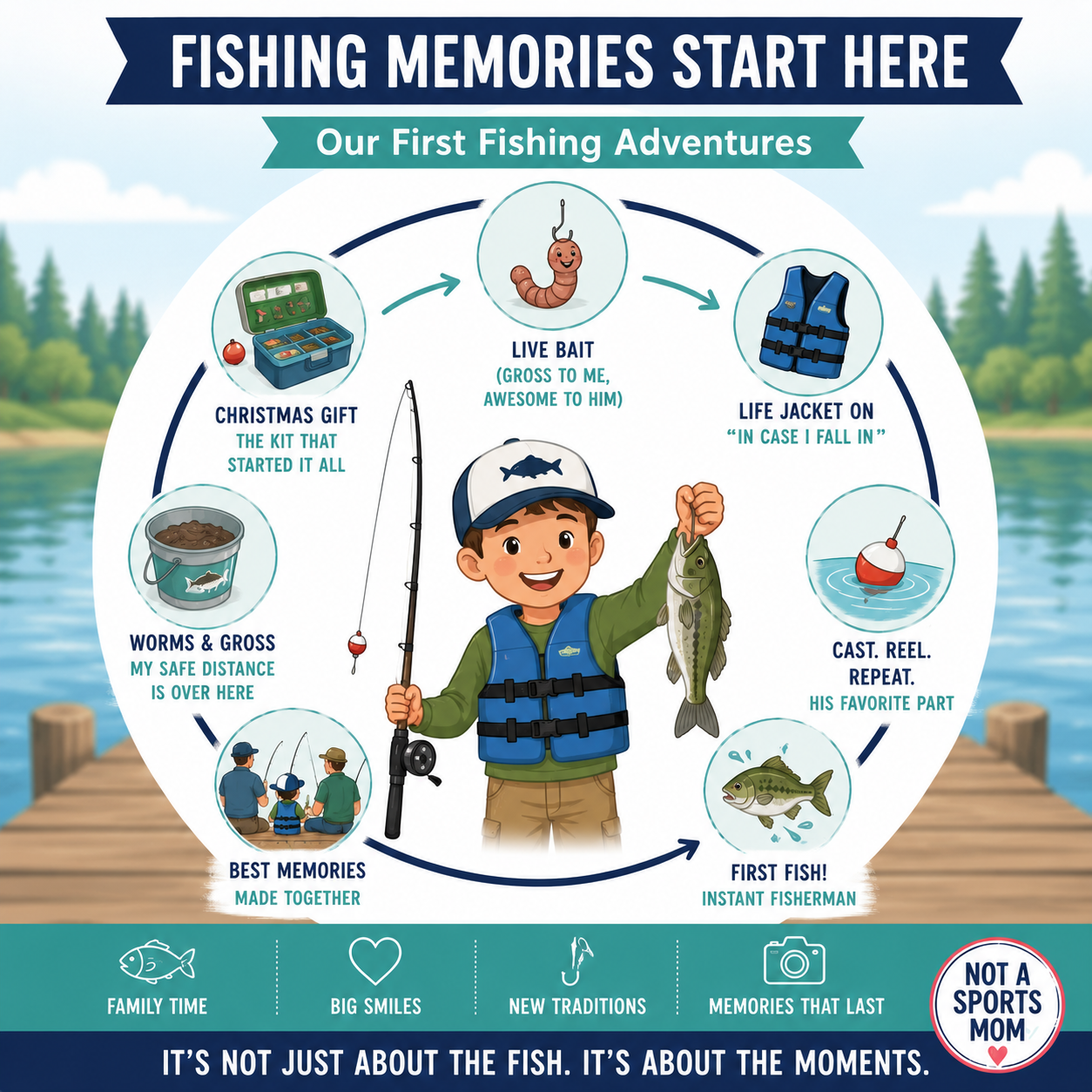
    It Started With a Christmas Gift

    For Christmas, my son got a beginner fishing kit. The idea was simple enough: whenever we traveled and spent time with family, he’d have his own little setup so he could fish with his dad, grandfather, and uncles. Mostly, I think everyone pictured some heartwarming family moments—maybe a few cute pictures, perhaps a tiny fish, and maybe fifteen minutes of actual fishing before he inevitably got distracted. As it turns out, that last assumption was pretty accurate.


    The First Fishing Trip

    The first time we tried fishing was during a beach trip, which, in hindsight, was probably asking a lot. Because when you’re five years old and standing near a beach, there are approximately 7,000 more interesting things happening than fishing. There was sand to dig in, crashing waves to jump over, shorebirds to chase, and random driftwood sticks to collect. Literally everything else was competing with fishing, and the beach distractions were incredibly strong.

    He’d cast a line, watch it intently for about twenty seconds, and then suddenly remember another urgent adventure he needed to go on. The fishing itself lasted, but his attention span did not. And honestly? That felt about right.


    The Lake Trip Changed Everything

    A few months later, we took a trip to a lake, and that’s when fishing suddenly became serious business. Every morning, the boys headed down to the dock (even in the pouring rain): Grandpa, Dad, Uncles, and now, one very excited five-year-old. There was something about standing on that dock that felt different. With no beach distractions and no waves, there was just water, fishing rods, and a group of guys who were completely happy standing around talking and waiting for fish. It is a concept I still don’t fully understand, but apparently, that’s a major part of the appeal.


    The Life Jacket Negotiations

    One thing I was pleasantly surprised about was the life jacket. He wore it without a single complaint. Actually, he was incredibly proud of it. At one point, someone asked him why he was wearing it. Without missing a beat, he said, “In case I fall in.” Fair point, it is hard to argue with that logic. Honestly, he was probably the most responsible person on the entire dock.

    The Worm Situation

    Now let’s talk about the worms, because this is where I learned that my son and I are very different people. The live bait arrived, and everyone gathered around. Instead of reacting the way I did, which was somewhere between mild horror and complete disgust, he was absolutely fascinated. He wanted to hold them, look closely at them, talk about them, and learn everything about them.

    Meanwhile, I was standing several feet away thinking: No thank you, you enjoy your worms, and I will enjoy observing from a safe, comfortable distance. I genuinely don’t understand how slimy worms became the least concerning part of putting sharp hooks near active children. Can we discuss that for a second? Why are we handing tiny humans sharp hooks and collectively agreeing this is a normal weekend activity?


    Is This How Fishing Works?

    The funniest part was watching him actually fish, or at least what he personally considered fishing. He would cast the line out, wait approximately three seconds, and then reel it right back in. Then he’d cast again, reel it back in, and repeat the cycle over and over. I have absolutely no idea if that’s how fishing actually works, and I’m pretty sure it isn’t, but he seemed happy, and nobody corrected him, so maybe there are different strategies, or maybe everyone was just enjoying the show.


    Then It Happened

    And then, he caught a fish. One single fish, and just like that, he became a fisherman. Not someone who had simply caught a fish, but a true fisherman, there is a major difference, at least according to him. His confidence level immediately increased by 400 percent. Suddenly, he had real experience, knowledge, strong opinions, and stories, and honestly, I loved every second of it.


    The Fish Were Exactly As Gross As I Expected

    The fish, however, were exactly what I feared: slimy, floppy, wiggly, and everything I dislike. Every time someone caught one, I instinctively took a small step backward. Yet, somehow, my son was absolutely thrilled. He wasn’t just happy when he caught his own; he was thrilled every time anyone caught a fish. If Grandpa caught one, it was amazing. If Dad caught one, it was incredible. If an uncle pulled one in, it was the best thing he’d ever seen. His excitement never faded, and every single fish was treated like a world-record catch. Watching that kind of pure joy is hard not to love.


    What I Learned About Fishing

    The funny thing is, I don’t think fishing was ever really about the fish, at least not for him. It was about being part of something bigger: standing on the dock with the boys, learning what they know, doing what they do, telling stories, sharing snacks, watching the quiet water, and every once in a while, catching a fish. Those are the real moments I think he’ll remember, not how many fish he caught or how big they were, but just that he got to be there on the dock with everyone.


    Apparently We Have a Fisherman Now

    Since that trip, fishing has come up regularly. He’s already planning future fishing adventures, talking about what he’ll catch next, and explaining fishing techniques to anyone who will listen based on approximately one fish’s worth of experience, which honestly feels very on-brand for a five-year-old. And while I still have absolutely no interest in touching slimy worms or flopping fish, I have to admit: watching him discover something new has been pretty great, even if it means I’m now raising a fisherman.


    Beginner Kid Fishing Kit Checklist

    Tackle & GearWhy It Matters on the Dock
    Beginner Fishing KitLook for closed-reel spin-cast combos to prevent nasty bird-nest line tangles.
    U.S. Coast Guard Approved Life JacketNon-negotiable dock safety gear that keeps anxious parents relaxed.
    Soft Plastic BaitsA sanity-saver if you (or your kids) have zero interest in touching live, wriggling worms.
    Sun ShirtTo protect from the sun and/or stay wram


    Frequently Asked Questions

    At what age can a child start learning to fish?
    Children as young as four or five can begin with simple closed-reel rods. The key is focusing on short sessions and celebrating the casting practice rather than just caught fish.


    What should I bring to keep a child engaged while fishing?
    Always pack plenty of snacks, a comfortable camp chair, and have a backup plan (like sand toys or sticker books) if their attention span runs out before the fish start biting.

    I started this parenting journey knowing nothing about hockey. Now we’re adding fishing to the list! What hobby or sport did your child suddenly become obsessed with that you knew absolutely nothing about? Drop a comment below and let me know—and please tell me I’m the only one who watches worms from a safe distance!

    Check out other stories

    • What’s In My Sports Mom Bag?

      (And How It Somehow Took Over My Life) Disclosure: This post contains affiliate links. If you purchase through these links, I may earn a small commission at no additional cost to you. There was a time when I thought youth sports required exactly three things: That was it. Or at least that’s what I thought…

    • Our First Week at Summer Sports Camp

      What Went Right, What Went Wrong, and What I Wish I’d Known Disclosure: This post contains affiliate links. If you purchase through these links, I may earn a small commission at no additional cost to you. When summer sports camp registration opened, my son was all in. This wasn’t just any camp. This was ice…

    • The Sports Mom Survival Kit

      The Sports Mom Survival KitEverything I Wish I’d Brought to My Kid’s First Sports Season Disclosure: This post contains affiliate links. If you purchase through these links, I may earn a small commission at no additional cost to you. I only share products we actually use, love, or genuinely think other sports parents would find…

    • “The Time I Cheered for the Wrong Team (And Other Sideline Fails)”

      Disclosure: This post contains affiliate links. If you purchase through these links, I may earn a small commission at no extra cost to you. I only recommend products we actually use, love, or would genuinely buy ourselves. I knew becoming a sports mom would involve learning new things. I expected to learn soccer rules. I…

    • Essential Tips for Youth Sports Parents (With the Stuff That Actually Helps)

      What to Pack for Youth Sports (So You’re Not Scrambling) Disclosure: This post contains affiliate links. If you purchase through these links, I may earn a small commission at no additional cost to you. I only recommend products we actually use, love, or would genuinely buy ourselves. When my son first started sports, I thought…

    • How My Son Somehow Ended Up With Five Different Soccer Jerseys

      Disclosure: This post contains affiliate links. If you purchase through these links, I may earn a small commission at no additional cost to you. I only recommend products we actually use, love, or would genuinely buy ourselves. I thought raising a soccer fan would be simple. You pick a team. You cheer for that team.…

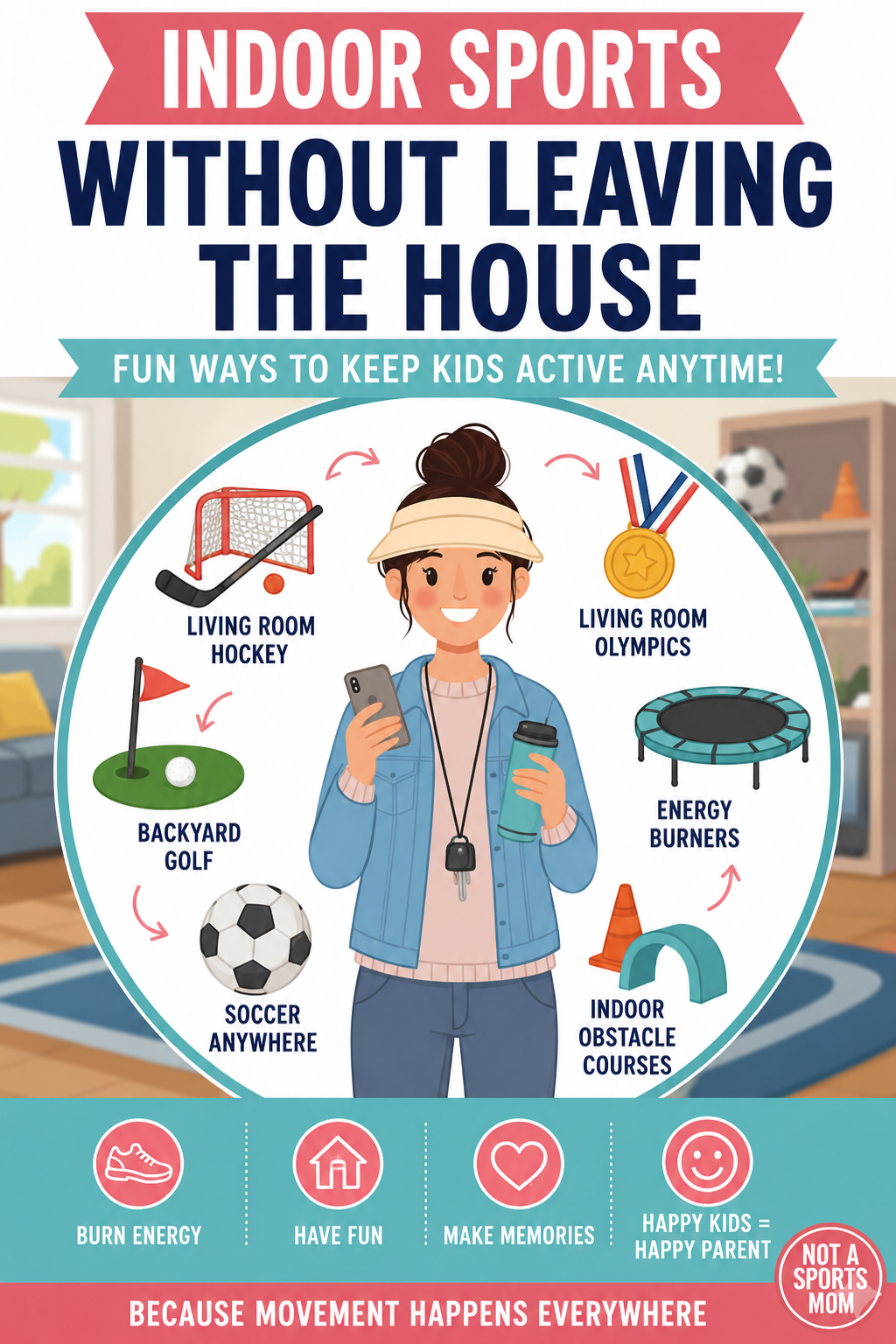
  • “How We Play Sports Without Leaving the House”

    “How We Play Sports Without Leaving the House”

    When I imagined having a sports kid, I assumed sports would happen at sports places.

    You know… soccer would happen on a soccer field. Hockey would happen at a rink. Swimming would happen in a pool. What I did not realize is that sports would mostly happen in my house. Or my backyard. Or occasionally in places that absolutely should not be used for sports. At this point, I honestly think my son sees every room as a potential sports venue. The living room? Hockey rink. The hallway? Sprinting track. The backyard? Golf course, soccer field, baseball diamond, and occasionally the Olympic Games. The kitchen? Technically off limits… but apparently still under consideration. As a mom who didn’t grow up playing most of these sports, I assumed practices and games would be where the learning happened.


    Instead, I’ve learned that some of the best sports moments happen between practices. The random moments. The made-up games. The rainy afternoons when a five-year-old has enough energy to power a small city and absolutely must move his body before bedtime. And honestly? Those have become some of my favorite moments.

    This post contains affiliate links. That means I may earn a small commission (at no extra cost to you) if you choose to purchase through them. I only share products we’ve used, loved, or genuinely found helpful in our own sports journey.

    Hockey Somehow Found Its Way Into Every Room

    If you read my golf story, you’ll know that a hockey stick was somehow involved there, too. That should have been my first clue. Because hockey doesn’t stay in one place. Hockey follows you.


    At our house, hockey started at the rink but quickly expanded into every available square foot of our home. I’ve found laundry baskets being used as goals. Pillows are being used as boards. Stuffed animals are apparently playing defense.


    One afternoon I walked into the living room and found my son announcing the final seconds of an imaginary championship game. He scored the game-winning goal against absolutely nobody and then celebrated by sliding across the floor in his socks.

    The confidence was honestly impressive.


    If your house has entered its hockey era, an indoor hockey setup can save a lot of furniture.

    Indoor Hockey Set
    Hockey Shooting Trainer

    The best part is that kids don’t care if it’s a real game. They just want to play.

    The Living Room Olympics Are More Competitive Than You’d Think

    Every four years, the Olympics arrive. Every four years, my son becomes an Olympian. Not officially, of course. But don’t tell him that. The Winter Olympics were particularly memorable. One day, the Swiffer became a ski pole. The next day we were apparently speed skating through the hallway. Then there was curling. And if you’ve never watched a five-year-old create his own version of curling using household objects, you’re missing out. There were rules. Nobody knew what they were. But there were definitely rules.


    At one point he even wanted an opening ceremony. For one athlete. Himself. Honestly, it was adorable.


    If your kids get caught up in Olympic fever like mine does, these have been fun additions:
    Winter Olympic Games for Kids
    Curling Zone Game

    Soccer Doesn’t Care About Weather

    One thing I’ve learned is that soccer players are apparently very committed.

    Rain? Soccer.

    Cold? Soccer.

    Too hot? Soccer, but sweatier.

    My son would happily kick a soccer ball every day if given the opportunity. I’ve seen him create goals using:

    • shoes
    • flower pots
    • pool noodles
    • whatever happens to be nearby

    The backyard has hosted more World Cup finals than I can count. The stakes are always high. The rules change constantly. And somehow, he always wins. One of the best things we’ve added has been a simple backyard goal. It’s amazing how much more exciting something becomes when there’s an actual target. For rainy days, soft foam sports balls have saved both windows and my sanity.

    The Activities That Actually Burn Energy

    Every parent knows this feeling. It’s 4:30 in the afternoon. Your child is bouncing off the walls. They’re talking faster. Running faster. Making stranger decisions. And you realize that if they don’t move their body soon, bedtime is going to be a disaster.


    Those are what I call “energy emergency” days. We’ve learned that certain activities work better than others. Obstacle courses are surprisingly effective. Balance boards somehow become competitions. Mini trampolines are basically magic.

    And scooter boards have provided more entertainment than I ever expected.

    One particularly memorable afternoon involved an obstacle course, a trampoline, and a stopwatch. By bedtime, he was asleep approximately three minutes after his head hit the pillow. A parenting victory if I’ve ever seen one.

    Golf Started With a Hockey Stick

    The funniest part of all this might still be golf. Because no one in our family golfs. Yet somehow, we now have golf equipment. It started with one random golf ball and a hockey stick. Then came golf tees. Then soft practice balls. Then a golf club. Then, putting holes. Then, backyard tournaments.


    This is apparently how sports happen. Kids find something interesting, and suddenly, you’re researching beginner golf equipment at ten o’clock at night. How We Accidentally Became a Golf Family. Honestly, though, that’s become one of my favorite parts of parenting. Watching interests develop. Watching confidence grow. Watching them discover what they love.


    What I’ve Learned About Playing Sports at Home

    The funny thing is that most of these moments don’t look like sports when they’re happening.

    They look like:

    • a living room mess
    • a backyard full of equipment
    • a child making up rules as they go

    But that’s actually where the learning happens. Kids don’t care if it’s official. They don’t care if it’s perfect. They don’t care if they’re doing it exactly right. They just care that it’s fun. And maybe that’s the lesson.


    Because somewhere between the imaginary hockey championships, the living room Olympics, the backyard soccer tournaments, and the accidental golf career, I’ve realized that movement matters more than perfection. The goal isn’t raising the next professional athlete. The goal is helping kids discover what they enjoy. And if they can burn some energy while they’re at it? Even better.


    Tell Me I’m Not Alone

    What’s the strangest thing your child has turned into sports equipment?

    Because ours started golf with a hockey stick.

    And honestly, that’s probably not even the weirdest one.

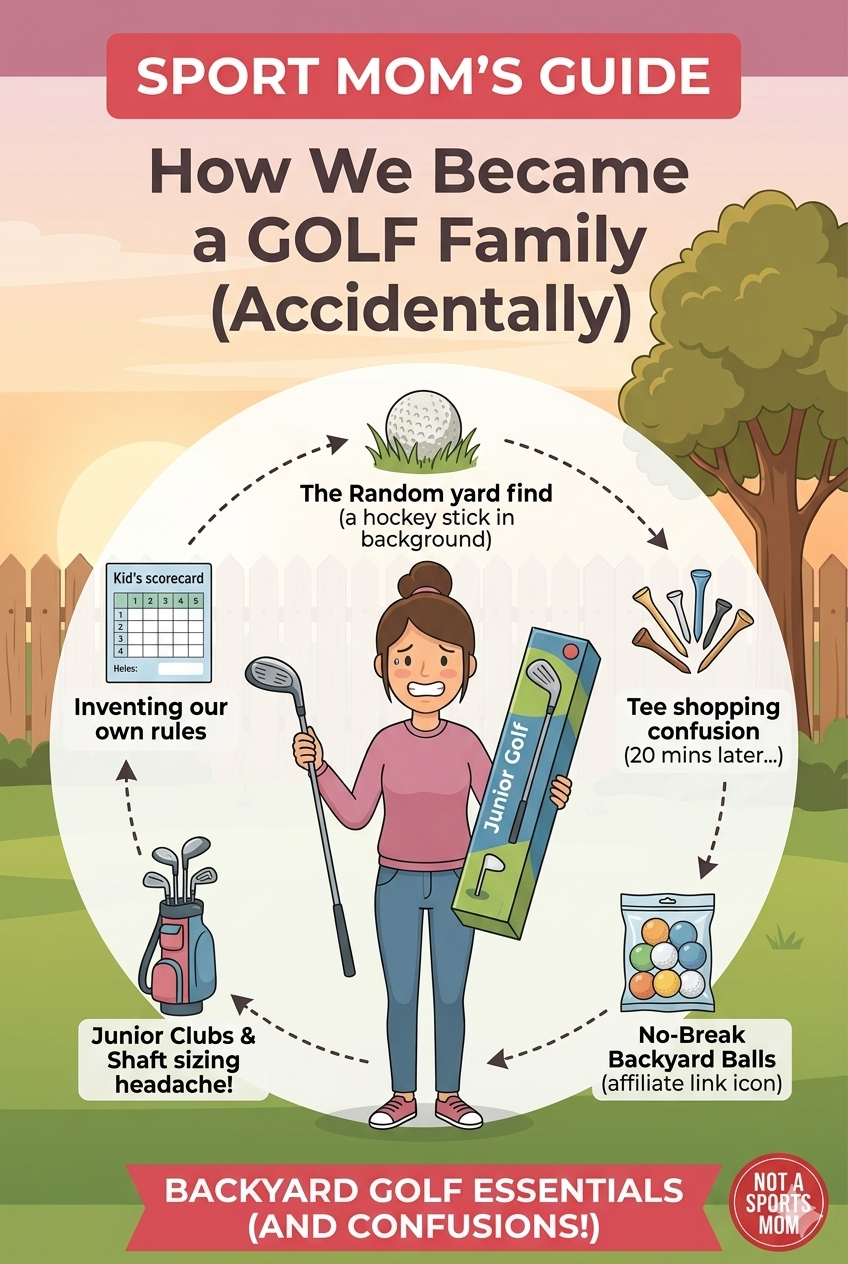
  • Accidentally Became a Golf Mom

    Accidentally Became a Golf Mom

    I really thought I had a decent idea of what sports would eventually show up in our lives.

    Maybe soccer. Probably baseball. Definitely hockey, because apparently, once a kid touches a hockey stick, it becomes part of the family forever. Golf, though?


    Golf never crossed my mind. Not once. And yet somehow, at 37 years old, I found myself standing in the sporting goods aisle while my 5-year-old seriously compared golf tees like he was preparing for The Masters. And honestly? I still don’t fully know how we got here.

    This post contains affiliate links. That means I may earn a small commission (at no extra cost to you) if you choose to purchase through them. I only share products we’ve used, loved, or genuinely found helpful in our own sports journey.

    It started the way most things seem to start in our house now: completely by accident.

    One afternoon, my son found a random golf ball in the yard. I still have no idea where it came from. We don’t golf. No one in our household golfs. There is no reason a golf ball should have been in our yard. But to a 5-year-old, finding a random sports object is basically fate.

    Instead of asking questions like:
    “Whose is this?”
    or
    “Why is this here?”

    …he grabbed his hockey stick, dropped the ball into the grass, and confidently announced:

    “I’m playing golf.”

    Like this was something he had always known.

    And before I could even process what was happening, he was fully committed.

    Now, if you’ve never watched a child invent a sport in real time, it’s honestly kind of incredible.

    There were no rules. No technique. No understanding whatsoever of how golf actually works. He just started whacking the golf ball around the yard with a hockey stick while narrating his own tournament.

    At one point he whispered,
    “This is a very important shot.”

    Sir. You are standing next to a sprinkler head wearing Crocs on the wrong feet.

    But the confidence? Unmatched.

    And the weird part is… he looked genuinely happy. Not “screen time happy.” Not “sugary snack happy.” Just fully locked into figuring something out. As someone who didn’t grow up playing any sports, he has found himself interested in it. I think that’s the part that keeps surprising me most about this whole youth sports adventure. Kids don’t care if they’re doing it correctly yet. They just care that it’s fun. Adults could honestly learn a lot from that.


    A few days later, golf came up again.

    We were driving home from school when he casually said, “You know what I want for my reward?” I assumed this meant candy. Or Pokémon cards. Or one of those tiny mystery toys that somehow immediately ends up under the couch forever.

    “No,” he said.
    “Golf tees.”

    Golf tees.

    That was the reward.

    And because I’m trying very hard to be the kind of mom who encourages interests before overthinking them, off we went to buy golf tees for a child who technically did not own a golf club.

    What nobody tells you is how aggressively complicated golf accessories are.

    There are SO many golf tees.

    Wood ones. Plastic ones. Tiny ones. Giant ones. Bright neon colors. Serious-looking neutral ones. Packs with approximately 700 tees for reasons I still don’t understand. And my son examined every single option like he was making a financial investment. I’m not exaggerating when I say this child spent twenty full minutes comparing golf tees.

    Meanwhile, I’m standing there wondering how I somehow became a person who has opinions about golf tee durability. Eventually, he picked “the perfect ones.” I still don’t know what made them perfect. But he knew immediately.


    The next issue became obvious pretty quickly: Real golf balls are terrifying when launched by a highly enthusiastic 5-year-old. Especially in a neighborhood. Especially when your child swings with the full confidence of someone who believes property damage is just part of the game.

    So I started looking for softer practice golf balls we could safely use in the backyard without accidentally taking out a window or causing tension with the neighbors (and so you could find them easier in the yard). And honestly? Best decision ever. The softer golf balls completely changed things because suddenly I wasn’t hovering nervously every time he swung.

    Instead of constantly saying:
    “Careful!”
    “Not toward the house!”
    “Please don’t hit that!”

    …I could actually relax and let him play. Which meant he stayed outside longer. And in sports mom world, “outside longer” is basically self-care.


    Then one night, completely out of nowhere, he looked at me very seriously and said:

    “I think I need a real golf club now.”

    And this is where things truly spiraled. Apparently, buying kids’ golf clubs is not simple. At all.

    Suddenly I was learning about:

    • right-handed clubs
    • left-handed clubs
    • junior sizing
    • graphite shafts
    • complete beginner golf sets for kids

    I genuinely found myself Googling:
    “How do I know if my child is right or left handed in golf?”

    Like this was information I should already have as an adult.

    And somehow, despite the fact that I had absolutely no idea what I was doing, we picked one: Kids Beginner Golf Set and the movable golf hole. And the second he started using an actual golf club instead of a hockey stick? That was it. Now we officially had a golf kid.


  • Summer Sports, Backyard Chaos, and How We Somehow Got Into Pickleball

    Summer Sports, Backyard Chaos, and How We Somehow Got Into Pickleball

    There’s something about summer that makes kids want to try every sport all at once.

    And by kids, I mean my child specifically, who wakes up every morning like he’s training for multiple athletic events… none of which I fully understand.

    One minute it’s baseball. Then it’s soccer.

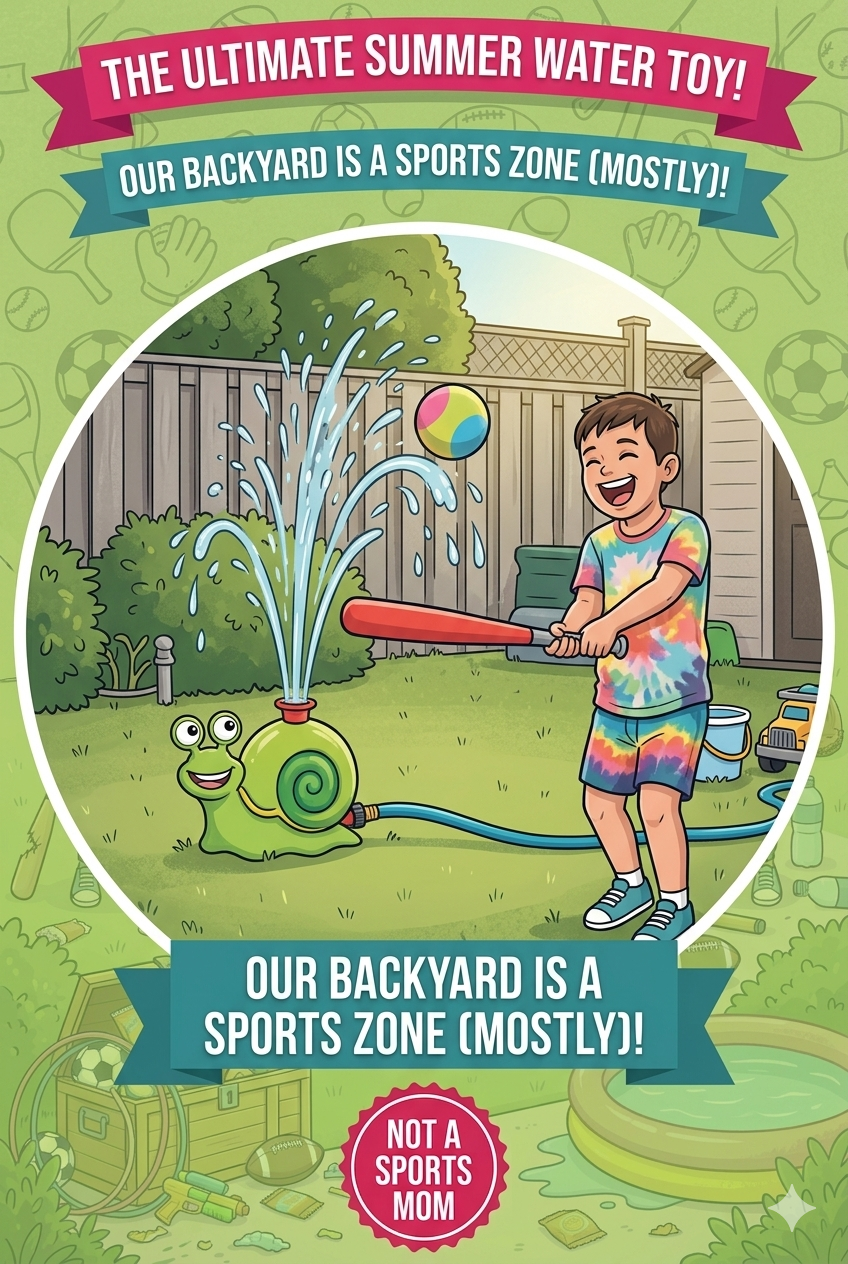
    Then we’re in the backyard inventing something that loosely resembles a sport but definitely involves water.


    And somehow — somewhere along the way — we are now a pickleball family.

    I truly do not remember agreeing to this.

    This post contains affiliate links. That means I may earn a small commission (at no extra cost to you) if you choose to purchase through them. I only share products we’ve used, loved, or genuinely found helpful in our own sports journey.

    Backyard Sports: Where It All Actually Happens

    If I’m being honest, most of our “sports training” doesn’t happen at practice.

    It happens in the backyard.

    Barefoot. Slightly chaotic. Usually with snacks involved.

    This is where confidence actually builds — not in perfect drills, but in just letting them try things over and over again.

    We’ve been using simple setups that make it easy to play without overthinking it:

    👉 Soft foam sports balls
    👉 Kids complete fitness toy set
    👉 Soccer goal set

    👉 Water Baseball

    Nothing fancy. Nothing intimidating. Just enough to keep him moving.

    And if you’re just getting into sports like we are, I talk more about keeping it simple in my
    👉 Beginner’s Guide for Parents Who Don’t Know Much About Sports

    Because truly — you don’t need much to get started.


    The Water + Sports Phase (Why Did I Not Think of This Sooner?)

    At some point, it got hot.

    Like… “we’re not doing anything unless water is involved” hot.

    And that’s when summer sports turned into water sports.

    We started adding water into everything:

    Enter: the backyard baseball launcher situation.

    Why did I not think of this sooner?

    It keeps him engaged WAY longer, and somehow he doesn’t even realize he’s practicing.

    We’ve also leaned into: sprinkler for kids / splash pad

    Because if they’re going to be outside anyway, it might as well be fun.


    Summer Camps: Where They Somehow Learn Even More

    Summer sports camps are one of those things I didn’t fully understand until we did one.

    I assumed it would be:

    • A lot of standing around
    • Mild chaos
    • Maybe a craft thrown in

    What it actually is:

    • Skill building
    • Confidence building
    • Socializing
    • And kids coming home exhausted in the best way

    It’s also where my kid started saying things like,
    “Coach said…”

    Which is when I knew we had officially entered a new phase.

    If you’re balancing camps, practices, and everything else, this is where having systems helps. I break that down more in:

    👉 How We Survive Youth Sports Schedules (Even When I Don’t Know What Day It Is)
    👉 Essential Tips for Youth Sports Parents

    Because summer schedules? They escalate quickly.


    The Snacks, The Bags, The Chaos

    Summer sports come with… logistics.

    There is always:

    • A bag
    • A backup bag
    • Snacks
    • Water
    • Something you forgot

    We now keep a “ready-to-go” setup because I got tired of scrambling every time we left the house.

    👉 Kid water bottle
    👉 Snack cooler
    👉 Zbar protein
    👉 Applesauce
    👉 Yogurt pouches

    Because nothing changes the mood faster than realizing you forgot snacks.

    Nothing.


    And Then… Pickleball Happened

    I don’t know how to explain this part other than:

    We went somewhere.
    There was a court.
    Someone handed him a paddle.

    And now… we play pickleball.

    Casually.
    Aggressively.
    Frequently.

    He loves it because:

    • It’s fast
    • It’s simple
    • It feels like a game

    I love it because:

    • I can mostly understand what’s happening
    • It doesn’t require a full gear setup
    • It’s actually fun

    This is how it happens, right?

    You try one thing… and suddenly it’s part of your routine.


    Summer Sports Are Not About Perfection

    If there’s one thing I’ve learned, it’s this:

    Summer sports don’t need to be structured to be valuable.

    They just need to happen.

    It’s:

    • Backyard games
    • Messy attempts
    • Random new interests
    • Trying something, quitting, trying something else

    It’s not about getting it right.

    It’s about letting them explore.


    The Real Win

    I still don’t fully understand all the rules.
    I still Google things mid-conversation.
    I still ask questions that probably have obvious answers.

    But I’m watching my kid:

    • Try new things
    • Build confidence
    • Stay active
    • And actually love it

    And that’s kind of the whole point.


    If You’re in Your Summer Sports Era Too…

    Lean into it.

    Let it be messy.
    Let it be fun.
    Let them try everything.

    Even if that means:

    • Your backyard turns into a sports complex
    • Your car becomes a snack station
    • And you somehow become a pickleball family overnight


    Tell Me I’m Not Alone

    What random sport did your kid get into this summer?

    And more importantly…
    Did you see it coming?

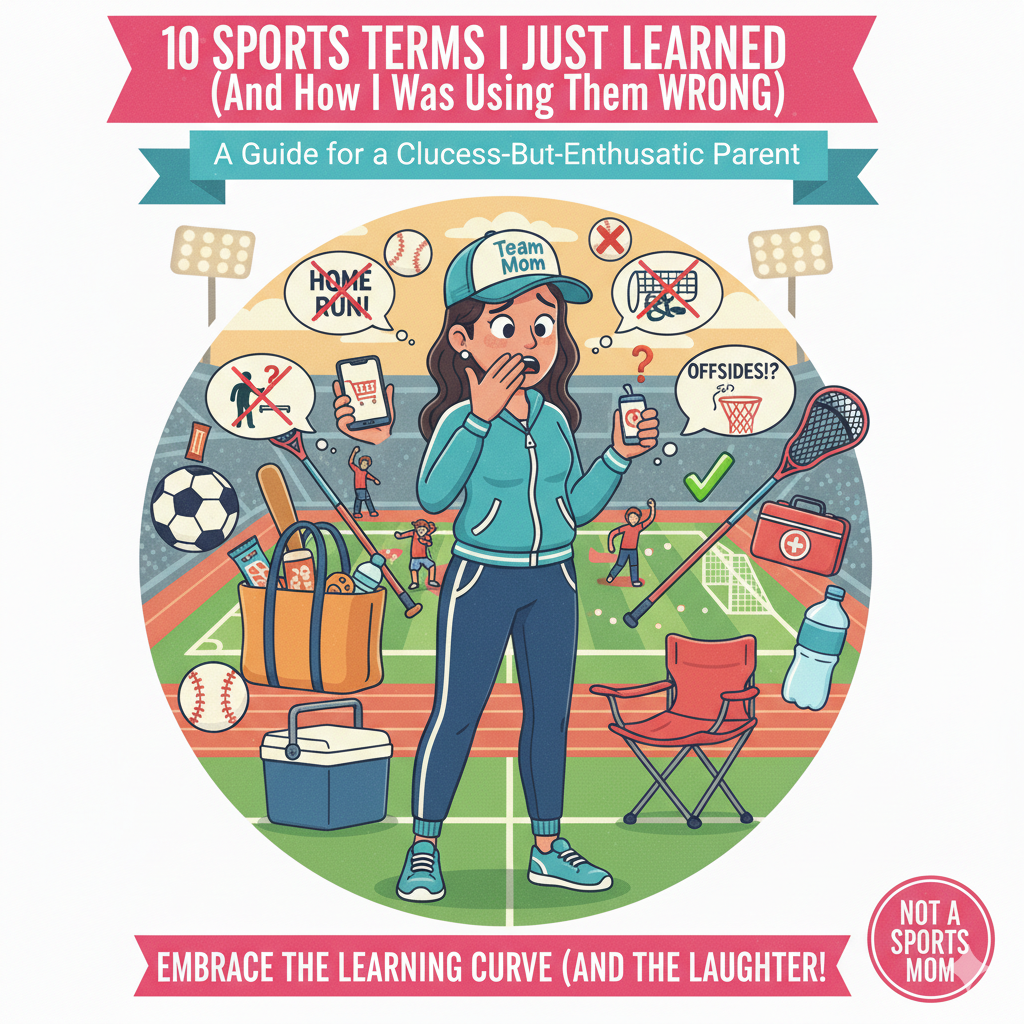
  • 10 Sports Terms I Just Learned (And How I Was Using Them Wrong)

    10 Sports Terms I Just Learned (And How I Was Using Them Wrong)

    I thought I had a decent handle on sports.

    Not like… expert-level. But enough to clap at the right times and nod confidently when other parents said things like “great play.”


    And then my kid started actually understanding the game.

    Which is when I realized… I had been using almost every sports term incorrectly for years. Not slightly wrong.Fully, confidently wrong.


    The kind of wrong where your kid looks at you like, “I love you, but please stop talking.”.

    This post contains affiliate links. That means I may earn a small commission (at no extra cost to you) if you choose to purchase through them. I only share products we’ve used, loved, or genuinely found helpful in our own sports journey.

    The Moment I Knew I Was in Trouble. We were at a game — one of those slightly chaotic, early-season ones where everyone is still figuring things out.

    I made what I thought was a very supportive, very normal comment:

    “Wow, great goal!”

    It was not a goal.

    It was… something else. Something important. Something my child immediately corrected me on with the authority of someone who has watched three YouTube videos and now considers themselves an expert.


    That’s when I knew: I was going to have to learn sports… from my kid. Honestly, I’ve been learning as I go — which is basically how this whole journey started. If you’re new to this too, I shared more about that in my Beginner’s Guide for Parents Who Don’t Know Much About Sports (because I truly did not come into this with a game plan).


    1. “Offside”

    What I thought it meant:
    Someone was… off to the side?

    What it actually means:
    There are rules. Lines. Timing. None of which I fully understand, but I now respect deeply. I used to say things like, “He was just standing there!”

    Apparently, that is the problem.


    2. “Assist”

    What I thought it meant:
    Someone helped a little.

    What it actually means:
    A very important, stat-worthy contribution that I absolutely should have been recognizing.

    Now I overcorrect and yell things like,
    “Great assist!!”
    even when I’m not 100% sure one happened.


    3. “Hat Trick”

    What I thought it meant:
    Something involving an actual hat.

    What it actually means:
    Three goals. Same player. Big deal.

    I once asked where the hat was.

    No one answered me.


    4. “Power Play”

    What I thought it meant:
    Someone was doing really well.

    What it actually means:
    There’s a penalty situation and one team has an advantage. Now I just say, “Oh wow, this is big,” and hope for the best.


    5. “Faceoff”

    What I thought it meant:
    A confrontation. Possibly emotional.

    What it actually means:
    A very structured start to play.

    I used to say, “Uh oh, here we go,” like something dramatic was about to happen. Now I know… it is just the beginning.


    6. “Cleats vs. Sneakers”

    What I thought it meant:
    Shoes are shoes.

    What it actually means:
    They are absolutely not interchangeable and you will know this five minutes before practice.


    This is how I ended up panic-ordering proper gear mid-season.

    soccer cleats and shin guards/socks. Lesson learned. This was also the moment I realized I needed an actual system for sports gear — not just throwing things in the backseat and hoping for the best. I ended up putting together a simple approach that has saved us more than once in my Essential Tips for Youth Sports Parents.


    7. “Warm-Ups”

    What I thought it meant:
    Optional. Casual. Light stretching.

    What it actually means:
    Essential. Structured. Something my child takes very seriously.

    We now have a whole pre-game routine that includes stretching, running, and occasionally using things at home like a small setup to burn energy before games.

    kids complete fitness toy set


    8. “Practice Gear vs. Game Gear”

    What I thought it meant:
    Same bag. Same stuff. Grab and go.

    What it actually means:
    Different everything.

    This is how we ended up with multiple bags — one for each sport — because apparently mixing them causes chaos. A soccer bag and a duffle bag/hockey bag.

    Now I just keep them packed at all times and hope for the best. If you’ve ever shown up with the wrong bag (or no bag), you already know why this matters. I go way more into how we organize everything — without overcomplicating it — in my Youth Sports Tips for Parents.


    9. “Hydration Break”

    What I thought it meant:
    A quick sip of water.

    What it actually means:
    A full emotional reset.

    Snacks, water, regrouping, sometimes a full personality shift.

    We do not leave the house without backup snacks anymore.

    kid water bottle
    Snack cooler
    Zbar / applesauce / yogurt pouches

    Because a hungry athlete is… not someone you want to negotiate with. This is also where I learned that being even slightly unprepared can completely derail the day. Snacks, water, backup everything — it all matters more than I expected. I break down exactly what we keep on hand in my Sports Parent Survival Tips.


    10. “Sideline Behavior”

    What I thought it meant:
    Sit and watch quietly.

    What it actually means:
    A full experience.

    You’re cheering, reacting, trying to follow along, and occasionally Googling things mid-game while pretending you’re checking a text.

    I now come prepared.

    A chair
    portable phone charger
    sanitizing wipes

    Because if I’m going to be confused, I’m at least going to be comfortable.


    If you’re also figuring this out as you go, you’re not alone. I’ve been sharing more of the real-life lessons (and mistakes) over in my Tips section, where I break things down in a way that actually makes sense for beginners.


    What I’ve Learned (Besides the Terms)

    Here’s the thing.

    I still don’t know everything. Not even close.

    I still whisper Google searches during games.
    I still clap at questionable moments.
    I still nod like I understand more than I do.

    But I’m learning.

    And more importantly — my kid doesn’t care that I don’t know everything.

    They just care that I’m there.

    Cheering. Showing up. Trying.

    Even if I call something a goal when it’s definitely not.


    The Real Win

    This whole “sports mom learning curve” isn’t about getting every term right.

    It’s about:

    Showing up
    Letting your kid teach you
    Laughing at yourself
    And slowly, accidentally… learning along the way

    Because one day you’ll say something correctly and your kid will go:

    “Yeah, that’s right.”

    And honestly?
    That feels like a win.


    And if you’re just getting started with youth sports and feel completely lost (same), I highly recommend starting here:

    👉 Beginner’s Guide for Parents Who Don’t Know Much About Sports
    👉 Essential Tips for Youth Sports Parents


    Tell Me I’m Not Alone

    Please tell me I’m not the only one learning sports terms in real time.

    What’s a sports term you recently learned (or confidently used wrong for way too long)?

    Drop it in the comments — I need to know I’m in good company.


    SEO Notes (already baked in)

    This post naturally includes:

    funny mom blog

    beginner sports terms

    sports mom learning

    youth sports parenting

    Home » Sports
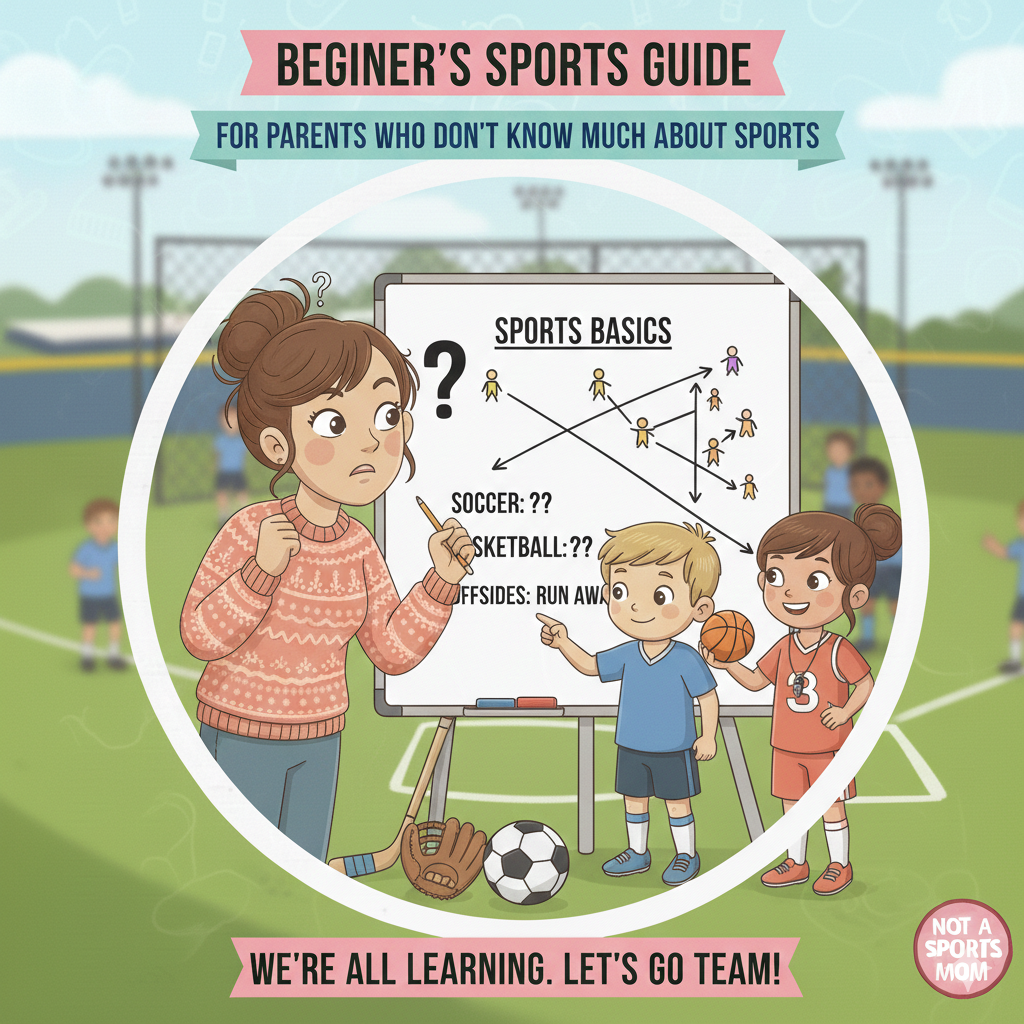
  • Beginner’s Sports Guide for Parents Who Don’t Know Much about Sports

    Beginner’s Sports Guide for Parents Who Don’t Know Much about Sports

    Skill building, exploring, and not overspending in the early years

    Even though I grew up cheerleading and skiing, team sports culture feels like a completely different world.


    Cheer had routines and repetition. Skiing was individual and seasonal. But soccer practice? Hockey drills? Rotating positions? That’s new territory.


    So when we first dipped our toes into youth sports, I kept reminding myself: this doesn’t have to start big.


    When kids are little, sports should look like play.

    Before leagues.
    Before uniforms.

    Before standing in a field wondering why everyone else seems to know which direction to run.


    One of the best early decisions we made was focusing on balance and coordination first. A Strider bike helped build confidence without the pressure of learning pedals right away.

    It wasn’t about becoming competitive. It was about letting my child trust their body — something I knew mattered from skiing, even if the sport itself was different.

    This post contains affiliate links. That means I may earn a small commission (at no extra cost to you) if you choose to purchase through them. I only share products we’ve used, loved, or genuinely found helpful in our own sports journey.

    Let Them Explore (Even If You Don’t Understand the Sport Yet)

    There’s something humbling about watching your child get excited about a sport you don’t fully understand.


    I can break down cheer counts in my sleep. I can explain ski lifts and green runs. But ask me about formations in soccer or line changes in hockey? I’m Googling.


    So instead of trying to steer them toward what I knew, I let them explore.

    We started simple — backyard play with soft foam sports balls.

    Kicking. Throwing. Missing. Laughing.

    No structure. No whistle. No sideline pressure.

    And I realized something important: they don’t need me to be an expert. They just need me to create space to try.

    Some weeks, they wanted soccer.
    Some weeks, they wanted to race bikes.
    Some weeks, they invented games that made absolutely no sense but involved a lot of running.

    Exploration isn’t lack of commitment. It’s skill building in disguise.


    Don’t Overspend Early (Especially When You’re Still Figuring It Out)

    When you didn’t grow up in team sports, it’s easy to assume you need all the gear immediately. Because everyone else seems prepared.

    But early on, you’re not investing in a long-term sport — you’re investing in exposure.

    Instead of diving into expensive equipment, we leaned into simple tools that supported movement and coordination.


    A kid’s complete fitness toy set turned our driveway into an obstacle course.

    Mini hurdles. Cones. Balance work. All the things that quietly build athletic skills without labeling them as “training.”

    We added a simple soccer goal set in the backyard.

    Not for competition — just for practice kicks after school while I started dinner.

    Those small, low-pressure moments built more confidence than any official league sign-up could have at that age.


    Skill Building Through Play (Even If It’s Not Your Sport)

    One thing cheerleading and skiing did teach me is that foundational skills matter more than early specialization.

    Balance.
    Coordination.
    Endurance.
    Listening.
    Resilience.

    Those translate across sports.

    So even if I don’t understand every rule in hockey or soccer, I understand effort. I understand practice. I understand falling down and getting back up.

    That’s what I focus on now.

    Not whether they’re ahead.
    Not whether they’re the best on the field.
    But whether they’re building skills that will serve them long-term.


    When Organized Sports Enter the Picture

    Eventually, the backyard turns into sign-up forms.

    And that’s when imposter syndrome can creep in.

    Other parents seem fluent in the language of drills and positions. Coaches use terminology like everyone should know it.

    That’s usually when I smile, nod, and Google later.

    And it’s okay.

    You don’t have to share your child’s exact sports background to support them in it.

    You just have to show up.


    The Part That Surprised Me Most

    The emotional side of youth sports is universal — no matter what you grew up playing.

    The first fall.
    The first loss.
    The first proud moment when something clicks.

    Those feelings don’t require rule knowledge.

    They require presence.

    And maybe a snack.


    You Don’t Have to Be an Expert in Their Sport

    You can have a background in cheer and skiing and still feel completely out of your depth at a hockey rink.

    You can understand athletic discipline but not know when to clap.

    You can be athletic-adjacent and still feel new here.

    The good news?

    Your child doesn’t need you to know everything about their sport.

    They need you to:

    • Encourage them
    • Let them explore
    • Avoid overspending before they’re ready
    • Celebrate effort over performance

    And trust that confidence grows slowly — one backyard kick, one practice, one slightly confusing game at a time.


    Home » Sports

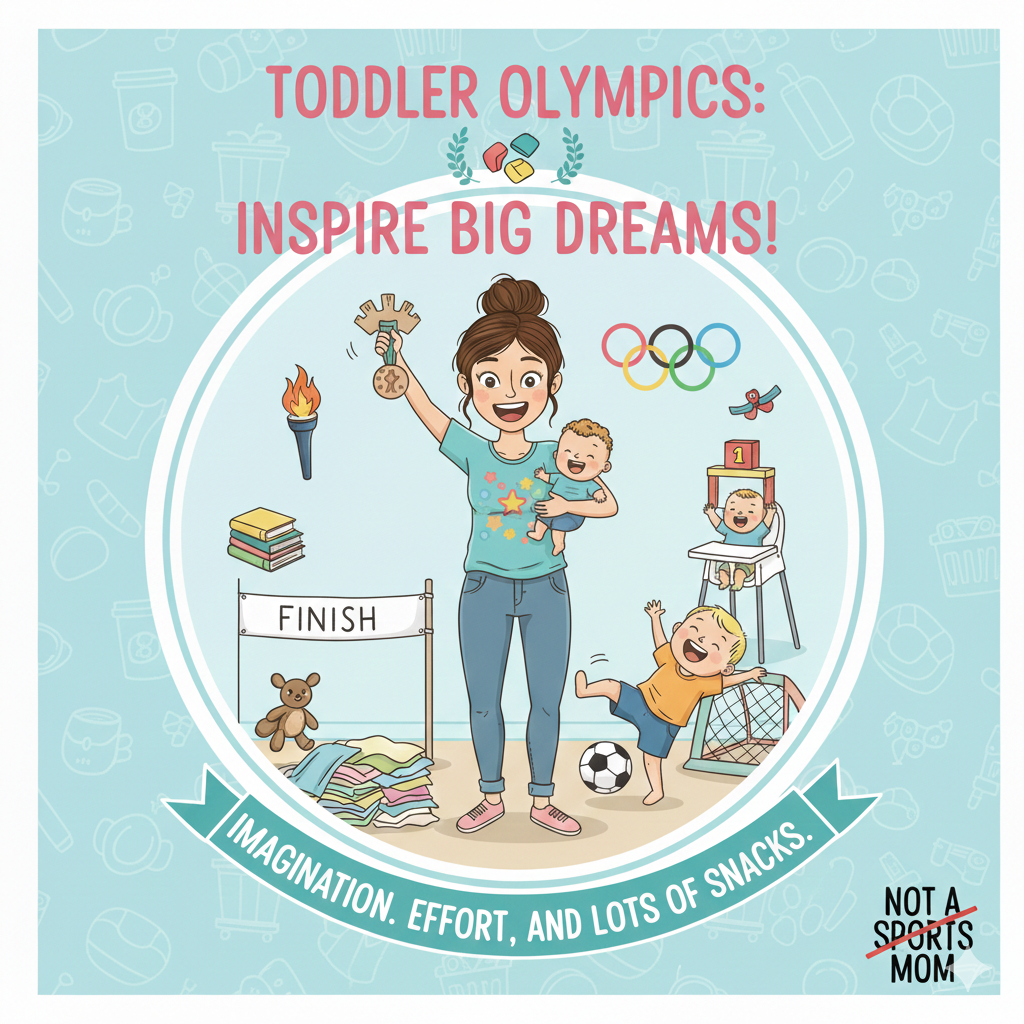
  • The Olympics, According to My Kid (and Me, Who Knows Almost Nothing)

    The Olympics, According to My Kid (and Me, Who Knows Almost Nothing)

    Every four years, the Winter Olympics show up on TV and I’m reminded just how many sports exist that I do not fully understand.

    There are flags.
    There is dramatic music.

    There are athletes doing things that feel both incredibly impressive and mildly alarming.

    I love the Olympics — not because I know the rules, but because the vibes are elite.

    This year, though, the Olympics didn’t just show up on our TV.


    They took over our entire house.

    Because when you watch the Olympics with a toddler, you’re not just watching sports — you’re accidentally raising an athlete.

    This post contains affiliate links, which means I may earn a small commission at no cost to you. I only share products I actually use or think other parents will love.


    The Sports I Did Not Know Existed (But Now Narrate Loudly)

    The Winter Olympics are packed with sports I never grew up knowing about.

    There’s ski jumping, which feels like courage mixed with questionable decision-making.

    There’s luge and skeleton, which look like, “What if we went faster… but face first?”

    There’s curling, which seems suspiciously like aggressive housekeeping.

    And then there’s biathlon — skiing and shooting — because apparently one sport wasn’t enough.

    There are also those ice racing / ski cross events where multiple people fly downhill at once, jumping, crashing, and somehow surviving. I don’t know the rules. I just gasp.

    As a Not a Sports Mom, my job is mostly asking:

    • “Is this timed or judged?”
    • “Is that part of the plan?”
    • “Are they okay???”

    I do not always get answers.

    But my kid?
    He gets ideas.


    Suddenly, Our House Needed Equipment

    Not official Olympic-grade equipment — just things that could survive a toddler with confidence.

    The kids weightlifting set came out immediately, because apparently we’re training now. This is the same beginner set we already had, and it’s now been “competed” with daily ever since.
    👉 We use this Kids Complete Fitness Toy Set

    Then came the dramatic floor work. Rolling. Jumping. Falling. Celebrating.

    That’s where foam mats, balance toys, and anything that lets him move safely came in.
    👉 Balance Board
    👉 Balance Board Game
    👉 Indoor Obstacle Course


    The Swiffer Is No Longer a Cleaning Tool

    At some point during Olympic coverage, my kid decided the Swiffer had a higher calling.

    The Swiffer has officially been reassigned from cleaning duties to full-time Olympic support staff.

    Some days it’s a ski pole.

    Other days it’s part of speed skating warm-ups.
    During biathlon coverage, it became “the thing you ski with and hold.”

    Honestly? At least it’s keeping him moving.

    When we want something actually meant for sports, these get used constantly:
    👉 Hockey Indoor Set
    👉 Soft Foam Sports Balls
    👉 Goal Set


    He Has Joined a Hockey Team From the Living Room

    Hockey is a big one in our house. So when a game comes on, my kid doesn’t just watch — he joins.

    He grabs his hockey stick — the same one he insists is “just like the real ones” — and lines up directly in front of the TV.
    👉 American Flag Hockey Stick

    Sometimes he switches teams mid-period.
    Sometimes he announces he’s benched.
    Sometimes he celebrates a goal before it actually happens.

    We rotate between:
    👉 HOCKEY Shooting Practice Set
    👉 Hockey Shooting Tape Practice

    I nod supportively, like a coach who understands none of it.


    Luge, Skeleton, and the “Roller Coaster” Sport

    Then there’s luge. Or skeleton. Or whatever terrifying sled-based sport happens to be on.

    To my kid, this is not dangerous.

    This is a roller coaster.


    He lays flat on the floor, arms tight to his sides, whisper-yelling “GO FAST” while sliding approximately three inches.


    At one point, he lined up pillows into what he called “the track.”

    I let it happen because the alternative was explaining physics.

    For winter-inspired chaos, these help:
    👉 Sled
    👉 Scooter Board
    👉 Trampoline


    Curling: Aggressive Housekeeping, Toddler Edition

    Curling deserves its own moment.

    Watching grown adults slide stones across ice somehow convinced my kid this was very doable.

    We leaned into it with:
    👉 Indoor Hovering Curling Set
    👉 Tabletop Curling Game

    Still unclear on the rules. Very clear on the enthusiasm.


    The Olympics Are Also Apparently a Family Event

    In our house, Olympic athletes aren’t strangers — they’re people we know.

    My kid is fully convinced certain people in his life are competing.

    Uncle B?
    Obviously doing ski jump.

    No questions.
    It just makes sense.

    Sometimes he points at the screen and says, “That could be him.” And honestly? Sure. Why not.


    Playing Olympics Without Knowing the Rules

    You don’t need to know the rules to play Olympics at home.

    You just need:

    • A living room
    • Imagination
    • Objects that were absolutely not designed for sports
    • A willingness to clap enthusiastically at unclear moments

    We rotate constantly. Lifting. Hockey. Sliding. Jumping. Curling. Skiing with a Swiffer.

    It’s chaotic.
    It’s loud.
    It’s joyful.


    If You Want to Lean Into the Olympic Chaos

    What’s actually getting used in our house — not perfectly, not correctly, but enthusiastically:


    A Very Not a Sports Mom Takeaway

    I still don’t know the rules.
    I still cheer at questionable moments.
    I still don’t understand half of what’s happening on the screen.

    But watching my kid try everything — without fear of being bad at it — is kind of incredible.


    The Olympics in our house aren’t about medals.

    They’re about movement, imagination, and letting kids explore what they love.

    Even if that means your Swiffer becomes Olympic equipment.

    Home » Sports
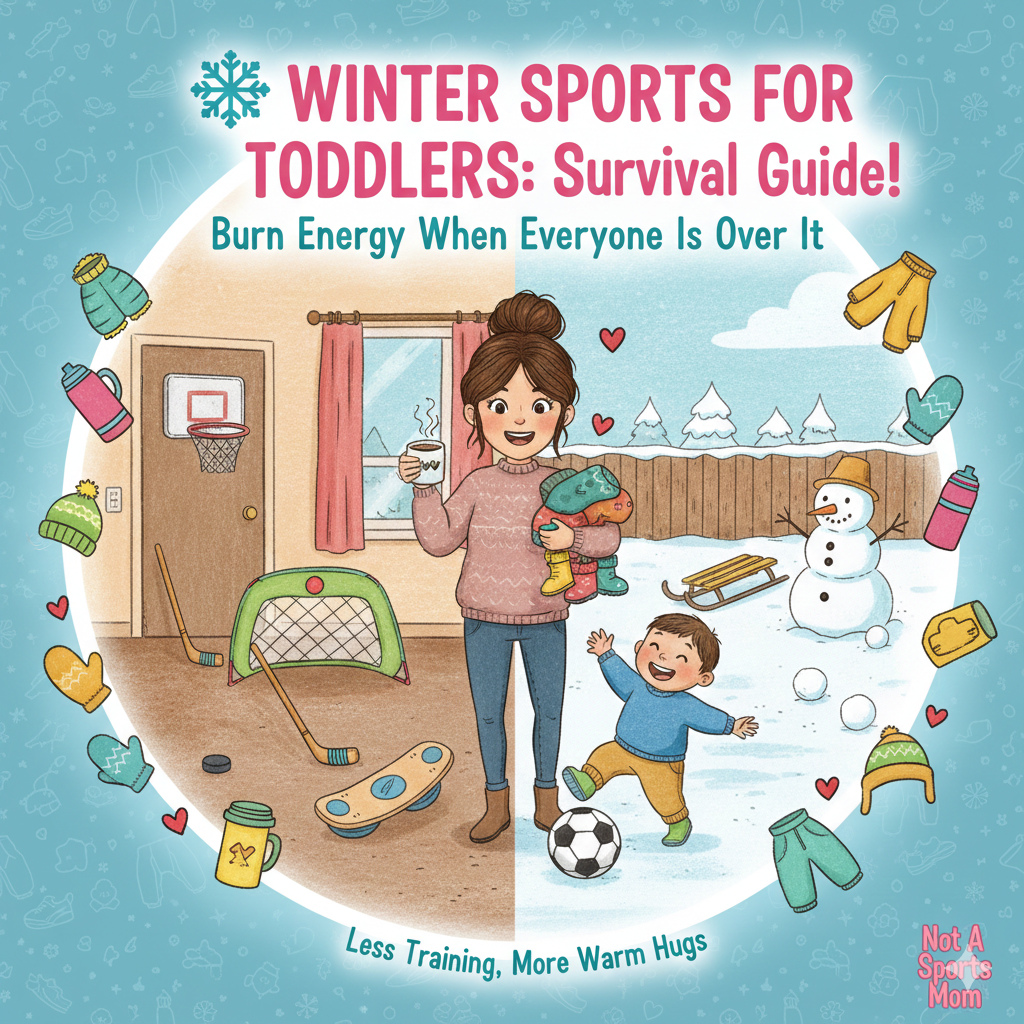
  • ❄️ Winter Sports for Toddlers: How We Burn Energy When It’s Cold and Everyone Is Over It

    ❄️ Winter Sports for Toddlers: How We Burn Energy When It’s Cold and Everyone Is Over It

    Winter is confusing as a parent.

    It’s freezing outside.
    The sun sets at 4:30pm.
    And yet… your toddler still wakes up every morning ready to move.

    I don’t know who decided kids should have peak energy during the coldest, darkest months of the year — but here we are.

    As a Not a Sports Mom, winter sports look a little different in our house. They’re less about rules and more about survival. Less “training” and more “please run around before bedtime.”

    Here’s what’s actually worked for us — both indoors and outdoors — when winter hits and staying active feels harder than it should.

    This post contains affiliate links, which means I may earn a small commission at no cost to you. I only share products I actually use or think other parents will love.

    Indoor Sports (Because Sometimes Going Outside Is Just Not Happening)

    Let’s start with the days when:

    • it’s too cold
    • it’s raining sideways
    • or you simply don’t have it in you

    🏀 Indoor Basketball (Hallway Edition)

    At some point, I accepted that our hallway is now a sports facility.

    A basketball hoop and a soft foam ball turn five minutes of setup into a solid 20 minutes of running, throwing, missing wildly, and celebrating anyway.

    Do I know the rules?
    No.
    Do I know it burns energy?
    Yes.


    ⚽ Indoor Soccer (Low Stakes, High Chaos)

    Indoor soccer with toddlers is mostly just running in circles with a ball — and honestly, that’s enough.

    We use:

    I don’t call drills. I just say, “Can you kick it over there?” and hope for the best.


    🏒 Floor Hockey (Same Dream, Less Ice)

    After attending enough hockey games, my toddler decided ice hockey was the goal.

    Ice was not happening.

    So we compromised with:

    It’s loud. It’s chaotic. But it scratches the itch without frostbite.


    “Winter Sports” Without the Winter Part

    Some sports don’t require snow — just balance and enthusiasm.

    ⛷️ Balance Practice (Pretend Ski Training)

    I’ve learned that toddlers don’t care if something is “technically correct.”

    A balance board (without screen time), a balance board game, or stepping stones become ski training in their minds.
    Scooters indoors (with rules) count too.

    Does this prepare them for the Olympics?
    Unclear.
    Does it help with coordination?
    Absolutely.


    🧘 Movement That Isn’t a Sport (But Saves the Day)

    Some days we need calmer movement.

    This is where kids yoga cards, stretch bands, or indoor obstacle courses come in.

    I call it “movement.”
    They call it “playing.”
    Everyone wins.


    Outdoor Winter Sports (When You Brave the Cold)

    When the weather is cold but manageable, getting outside still matters — even if it’s short.

    ❄️ Snow Sports for Toddlers

    Snow turns everything into a sport:

    • kicking a soccer ball through snow
    • throwing snowballs at a target
    • pulling a sled (which definitely counts as conditioning)

    The key here isn’t duration — it’s layers.

    Warm gloves, snow pants, and waterproof boots (👉 add links here) make all the difference between fun and meltdown.


    What I’ve Learned as a Not a Sports Mom in Winter

    Winter sports don’t need to look impressive.
    They don’t need rules.
    They don’t need perfect form.

    They just need:

    • movement
    • consistency
    • and a willingness to redefine what “counts”

    Because burning energy matters more than knowing the playbook.


    What Actually Helped Us (For Fellow Winter Survivors)

    If you’re staring down winter with an active toddler, these are the things that genuinely helped us:

    No pressure. No must-haves. Just options.


    Final Thoughts From the Cold Sidelines

    You don’t need to know sports to raise an active kid in winter.

    You just need:

    • flexibility
    • creativity
    • and realistic expectations

    If movement happens — even in small bursts — you’re doing it right.


    ❄️ Your Turn

    What do winter sports look like in your house?
    Indoor chaos? Backyard snow games?
    Tell me — I’m always taking notes.

    Home » Sports