
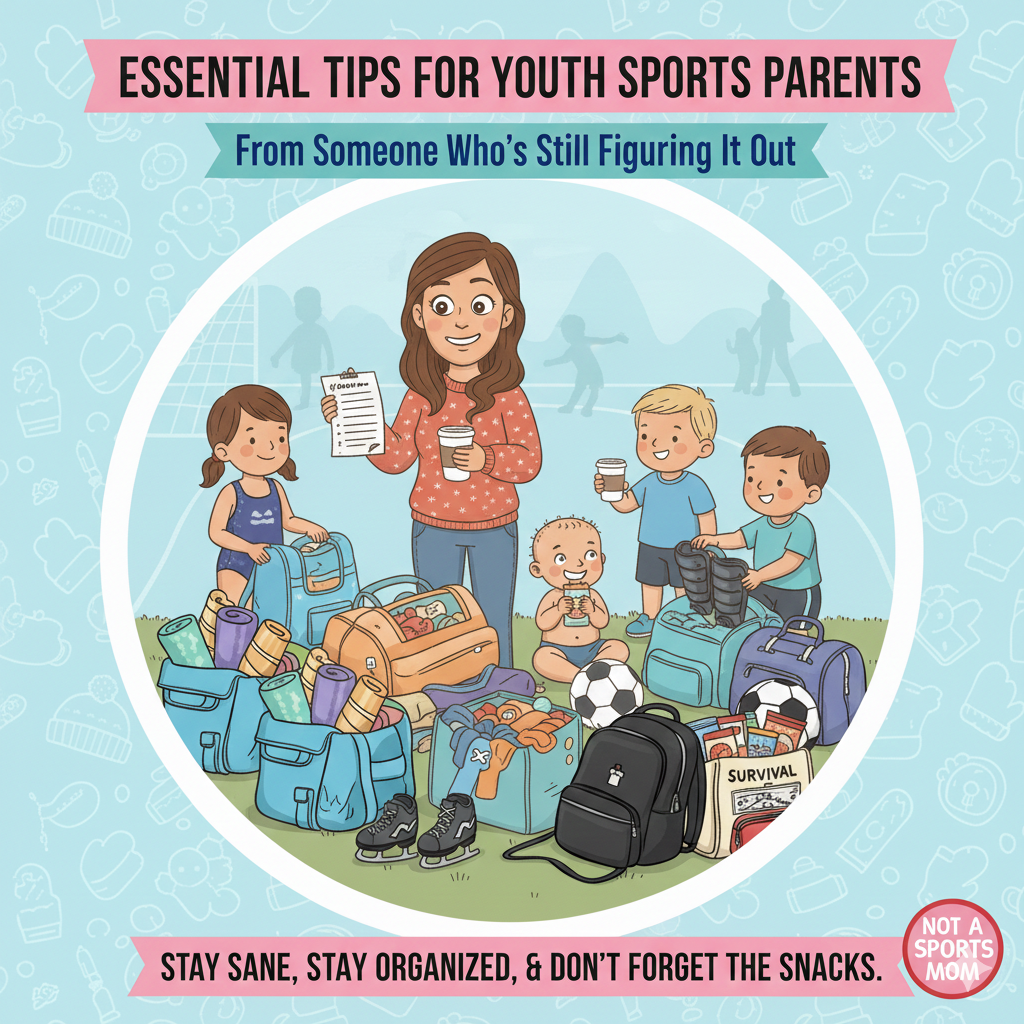
Real-life advice from a mom learning sports alongside her kid
Youth sports sound simple until you’re actually living them.
Before kids, I thought youth sports meant showing up once or twice a week, clapping politely, and maybe bringing a snack. What I didn’t realize was that youth sports would quietly become a full-blown lifestyle. One that involves juggling schedules, hauling gear, decoding rules I never learned, and managing very big emotions in very small bodies.
I didn’t grow up a sports person. I wasn’t a “sports mom” by nature. And yet here I am, learning hockey rules from YouTube, Googling “what size shin guards does a kid need,” and trying to remember which jersey is clean right now.
That’s why I started Not a Sports Mom — not as an expert, but as someone figuring it out in real time.
This post pulls together the most important lessons I’ve learned so far. These aren’t professional opinions or coaching advice. They’re real-life tips from the sidelines, the living room floor, and the car ride home — especially for parents who feel like they’re learning youth sports alongside their kid.
This post contains affiliate links. If you purchase through these links, I may earn a small commission at no extra cost to you. I only recommend products we actually use or would use ourselves.
Youth Sports for Beginners: Where to Start (When You Don’t Know Anything)
One of the first questions I hear from parents is:
“What’s the best youth sport for beginners?”
The honest answer? The best beginner sport is the one that:
- Welcomes new kids
- Focuses on fun over performance
- Teaches basic movement and teamwork
- Doesn’t require you to already know the rules
- One that your kid is interested in and or curious about
Sports like soccer, T-ball, basketball, and swimming tend to be great entry points. They introduce structure without overwhelming kids (or parents), and they help build confidence early.
More importantly, your child doesn’t need to “be good” to start. Youth sports at this stage are about learning how to try, how to lose, how to listen, and how to keep going even when it’s hard.
And for parents? It’s about learning that it’s okay to ask questions — sometimes a lot of them.
Supporting Your Child
(Without Turning It Into Pressure)
Supporting your child in sports sounds straightforward — until emotions enter the picture.
Kids take games personally. Missed goals feel devastating. Losing can feel unfair. And sometimes the car ride home is quieter than you expected.
One of the biggest lessons I’ve learned is that support doesn’t mean coaching from the sidelines or correcting every mistake. It means:
- Showing up consistently
- Letting them talk (or not talk) afterward
- Celebrating effort, not outcomes
- Reminding them that one game doesn’t define them
Some days, support looks like cheering. Other days, it looks like sitting quietly with a snack and letting the moment pass.
What to Pack for Youth Sports
(So You’re Not Scrambling)
If there’s one universal truth about youth sports, it’s this:
You will forget something — unless you build a system.
Over time, I learned that packing once and staying packed is the only way to survive. Most sports families eventually develop:
- A dedicated bag for each sport
- A car bag that never leaves the trunk
- Backup clothes (because you never know)
- Snacks for the inevitable “I’m starving” moment
- A small first-aid kit for just-in-case situations
Youth sports aren’t forgiving when it comes to forgotten items, so being slightly over-prepared is actually a form of self-care.
Balancing Sports, School, and Family Life
(Imperfectly)
Balancing youth sports with school, family time, and rest is one of the hardest parts — especially when practices fall right after school and evenings disappear quickly.
What’s helped us most is accepting that balance doesn’t mean perfection. Some weeks are smooth. Others feel chaotic. Planning helps, but flexibility matters just as much.
A few things that made a difference:
- Shared calendars
- Clear expectations around homework
- Protecting at least one night a week with no activities
- Letting go of guilt when everything doesn’t fit neatly
Youth sports are just one season of life. They shouldn’t consume all of it.
Managing Youth Sports Schedules
(When You Don’t Know What Day It Is)
Between practices, games, makeups, and weather changes, youth sports schedules can feel overwhelming fast.
I’ve learned that managing schedules is less about being organized and more about building habits:
- One place where everything lives (calendar, notes, reminders)
- Bags packed ahead of time
- Snacks ready before hunger hits
- Accepting that you will occasionally show up on the wrong day
And that’s okay.
No one is keeping score on parenting logistics — even when it feels like they are.
Finding Community in Youth Sports Parenting
One unexpected gift of youth sports is the community.
Standing on the sidelines week after week introduces you to other parents who are just as tired, confused, and invested as you are. Conversations start with the weather or the schedule, and before you know it, you’re swapping snack ideas or laughing about the same shared chaos.
You don’t have to know everything to belong here. Showing up is enough.
Why These Tips Matter
This page — and this post — exist because youth sports can feel overwhelming, especially when you didn’t grow up in them.
If you’ve ever:
- Googled rules mid-game
- Forgotten a bag (or two)
- Sat in your car for a minute before going inside
- Wondered if you’re doing any of this right
You’re exactly where you’re supposed to be.
Youth sports aren’t about being perfect. They’re about learning, trying, supporting, and growing — for kids and parents alike.