Category: parenting

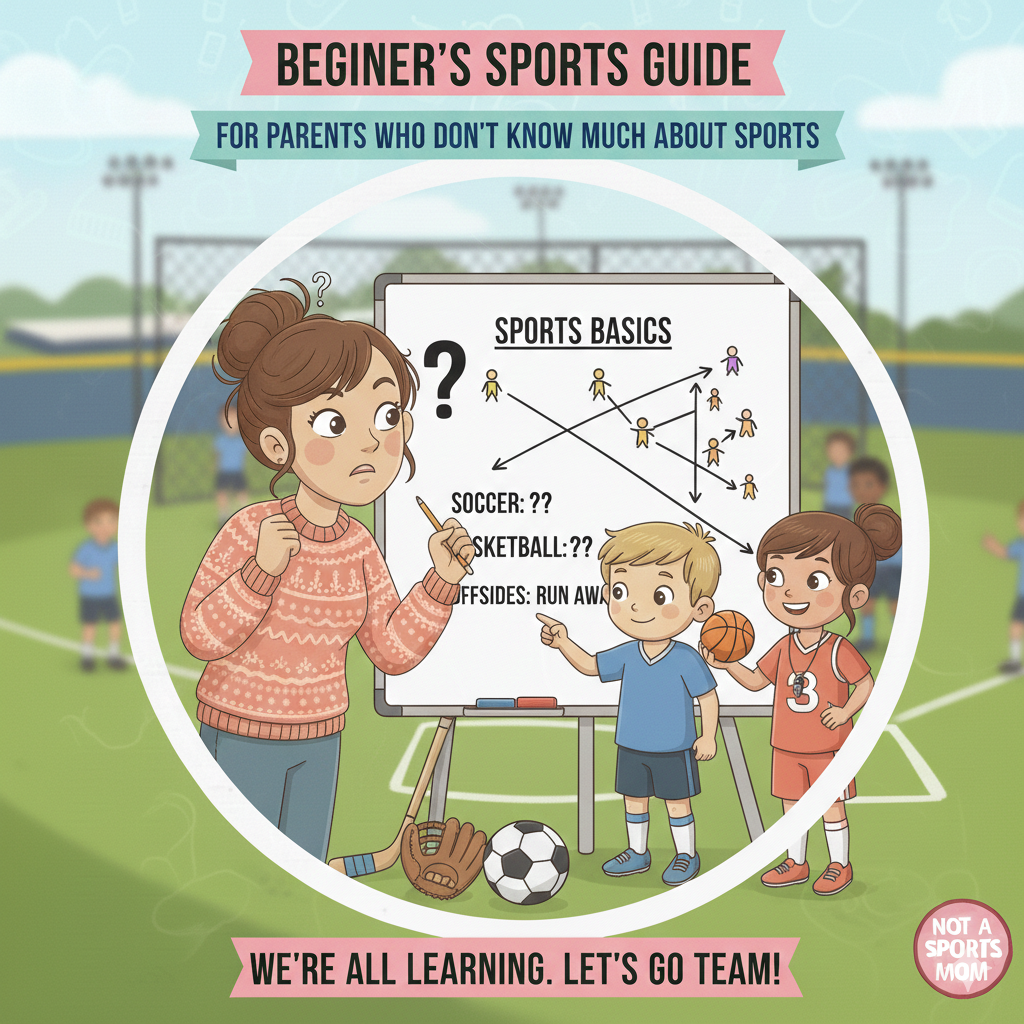
  • Beginner’s Sports Guide for Parents Who Don’t Know Much about Sports

    Beginner’s Sports Guide for Parents Who Don’t Know Much about Sports

    Skill building, exploring, and not overspending in the early years

    Even though I grew up cheerleading and skiing, team sports culture feels like a completely different world.


    Cheer had routines and repetition. Skiing was individual and seasonal. But soccer practice? Hockey drills? Rotating positions? That’s new territory.


    So when we first dipped our toes into youth sports, I kept reminding myself: this doesn’t have to start big.


    When kids are little, sports should look like play.

    Before leagues.
    Before uniforms.

    Before standing in a field wondering why everyone else seems to know which direction to run.


    One of the best early decisions we made was focusing on balance and coordination first. A Strider bike helped build confidence without the pressure of learning pedals right away.

    It wasn’t about becoming competitive. It was about letting my child trust their body — something I knew mattered from skiing, even if the sport itself was different.

    This post contains affiliate links. That means I may earn a small commission (at no extra cost to you) if you choose to purchase through them. I only share products we’ve used, loved, or genuinely found helpful in our own sports journey.

    Let Them Explore (Even If You Don’t Understand the Sport Yet)

    There’s something humbling about watching your child get excited about a sport you don’t fully understand.


    I can break down cheer counts in my sleep. I can explain ski lifts and green runs. But ask me about formations in soccer or line changes in hockey? I’m Googling.


    So instead of trying to steer them toward what I knew, I let them explore.

    We started simple — backyard play with soft foam sports balls.

    Kicking. Throwing. Missing. Laughing.

    No structure. No whistle. No sideline pressure.

    And I realized something important: they don’t need me to be an expert. They just need me to create space to try.

    Some weeks, they wanted soccer.
    Some weeks, they wanted to race bikes.
    Some weeks, they invented games that made absolutely no sense but involved a lot of running.

    Exploration isn’t lack of commitment. It’s skill building in disguise.


    Don’t Overspend Early (Especially When You’re Still Figuring It Out)

    When you didn’t grow up in team sports, it’s easy to assume you need all the gear immediately. Because everyone else seems prepared.

    But early on, you’re not investing in a long-term sport — you’re investing in exposure.

    Instead of diving into expensive equipment, we leaned into simple tools that supported movement and coordination.


    A kid’s complete fitness toy set turned our driveway into an obstacle course.

    Mini hurdles. Cones. Balance work. All the things that quietly build athletic skills without labeling them as “training.”

    We added a simple soccer goal set in the backyard.

    Not for competition — just for practice kicks after school while I started dinner.

    Those small, low-pressure moments built more confidence than any official league sign-up could have at that age.


    Skill Building Through Play (Even If It’s Not Your Sport)

    One thing cheerleading and skiing did teach me is that foundational skills matter more than early specialization.

    Balance.
    Coordination.
    Endurance.
    Listening.
    Resilience.

    Those translate across sports.

    So even if I don’t understand every rule in hockey or soccer, I understand effort. I understand practice. I understand falling down and getting back up.

    That’s what I focus on now.

    Not whether they’re ahead.
    Not whether they’re the best on the field.
    But whether they’re building skills that will serve them long-term.


    When Organized Sports Enter the Picture

    Eventually, the backyard turns into sign-up forms.

    And that’s when imposter syndrome can creep in.

    Other parents seem fluent in the language of drills and positions. Coaches use terminology like everyone should know it.

    That’s usually when I smile, nod, and Google later.

    And it’s okay.

    You don’t have to share your child’s exact sports background to support them in it.

    You just have to show up.


    The Part That Surprised Me Most

    The emotional side of youth sports is universal — no matter what you grew up playing.

    The first fall.
    The first loss.
    The first proud moment when something clicks.

    Those feelings don’t require rule knowledge.

    They require presence.

    And maybe a snack.


    You Don’t Have to Be an Expert in Their Sport

    You can have a background in cheer and skiing and still feel completely out of your depth at a hockey rink.

    You can understand athletic discipline but not know when to clap.

    You can be athletic-adjacent and still feel new here.

    The good news?

    Your child doesn’t need you to know everything about their sport.

    They need you to:

    • Encourage them
    • Let them explore
    • Avoid overspending before they’re ready
    • Celebrate effort over performance

    And trust that confidence grows slowly — one backyard kick, one practice, one slightly confusing game at a time.
    Home » parenting

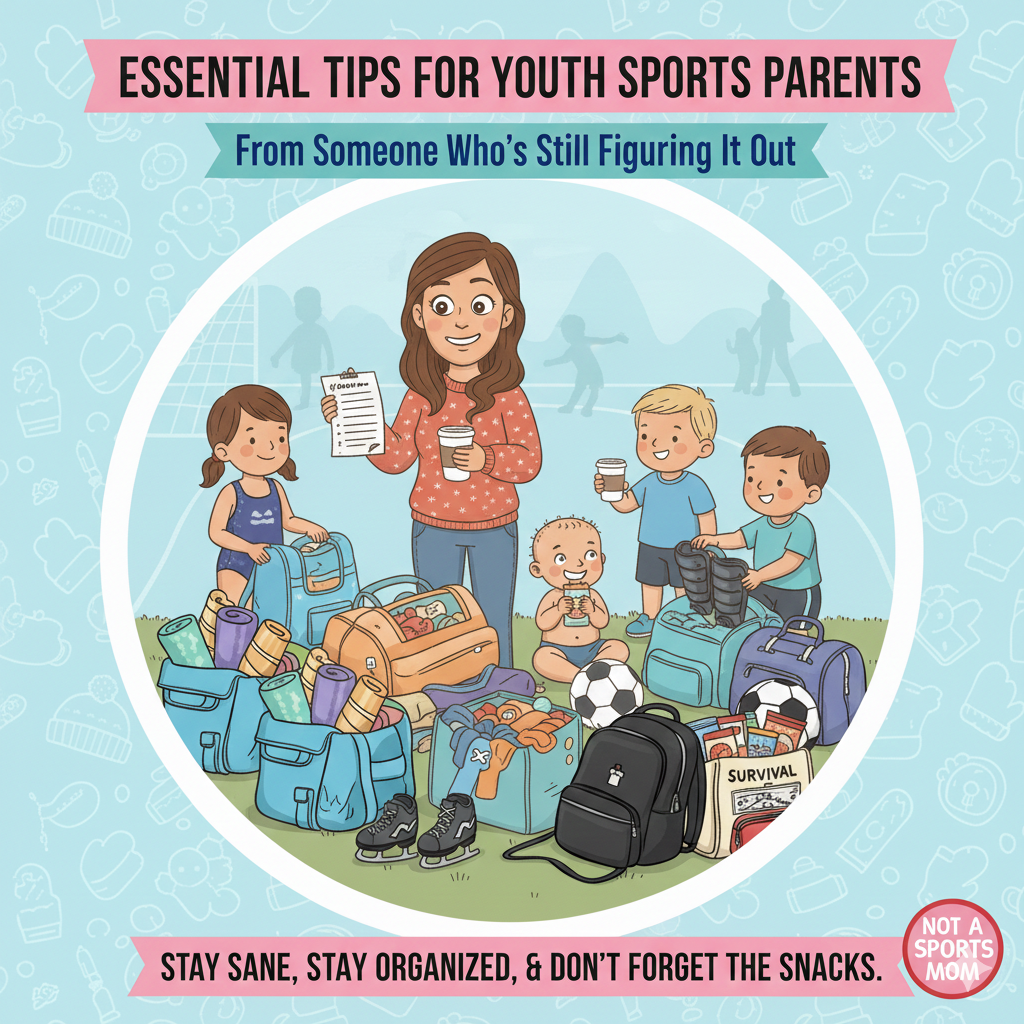
  • Essential Tips for Youth Sports Parents (From Someone Who’s Still Figuring It Out)

    Essential Tips for Youth Sports Parents (From Someone Who’s Still Figuring It Out)

    Real-life advice from a mom learning sports alongside her kid

    Youth sports sound simple until you’re actually living them.


    Before kids, I thought youth sports meant showing up once or twice a week, clapping politely, and maybe bringing a snack. What I didn’t realize was that youth sports would quietly become a full-blown lifestyle. One that involves juggling schedules, hauling gear, decoding rules I never learned, and managing very big emotions in very small bodies.


    I didn’t grow up a sports person. I wasn’t a “sports mom” by nature. And yet here I am, learning hockey rules from YouTube, Googling “what size shin guards does a kid need,” and trying to remember which jersey is clean right now.


    That’s why I started Not a Sports Mom — not as an expert, but as someone figuring it out in real time.


    This post pulls together the most important lessons I’ve learned so far. These aren’t professional opinions or coaching advice. They’re real-life tips from the sidelines, the living room floor, and the car ride home — especially for parents who feel like they’re learning youth sports alongside their kid.

    This post contains affiliate links. If you purchase through these links, I may earn a small commission at no extra cost to you. I only recommend products we actually use or would use ourselves.

    Youth Sports for Beginners: Where to Start (When You Don’t Know Anything)

    One of the first questions I hear from parents is:
    “What’s the best youth sport for beginners?”

    The honest answer? The best beginner sport is the one that:

    • Welcomes new kids
    • Focuses on fun over performance
    • Teaches basic movement and teamwork
    • Doesn’t require you to already know the rules
    • One that your kid is interested in and or curious about

    Sports like soccer, T-ball, basketball, and swimming tend to be great entry points. They introduce structure without overwhelming kids (or parents), and they help build confidence early.


    More importantly, your child doesn’t need to “be good” to start. Youth sports at this stage are about learning how to try, how to lose, how to listen, and how to keep going even when it’s hard.


    And for parents? It’s about learning that it’s okay to ask questions — sometimes a lot of them.


    Supporting Your Child
    (Without Turning It Into Pressure)

    Supporting your child in sports sounds straightforward — until emotions enter the picture.


    Kids take games personally. Missed goals feel devastating. Losing can feel unfair. And sometimes the car ride home is quieter than you expected.


    One of the biggest lessons I’ve learned is that support doesn’t mean coaching from the sidelines or correcting every mistake. It means:

    • Showing up consistently
    • Letting them talk (or not talk) afterward
    • Celebrating effort, not outcomes
    • Reminding them that one game doesn’t define them

    Some days, support looks like cheering. Other days, it looks like sitting quietly with a snack and letting the moment pass.


    What to Pack for Youth Sports
    (So You’re Not Scrambling)

    If there’s one universal truth about youth sports, it’s this:
    You will forget something — unless you build a system.

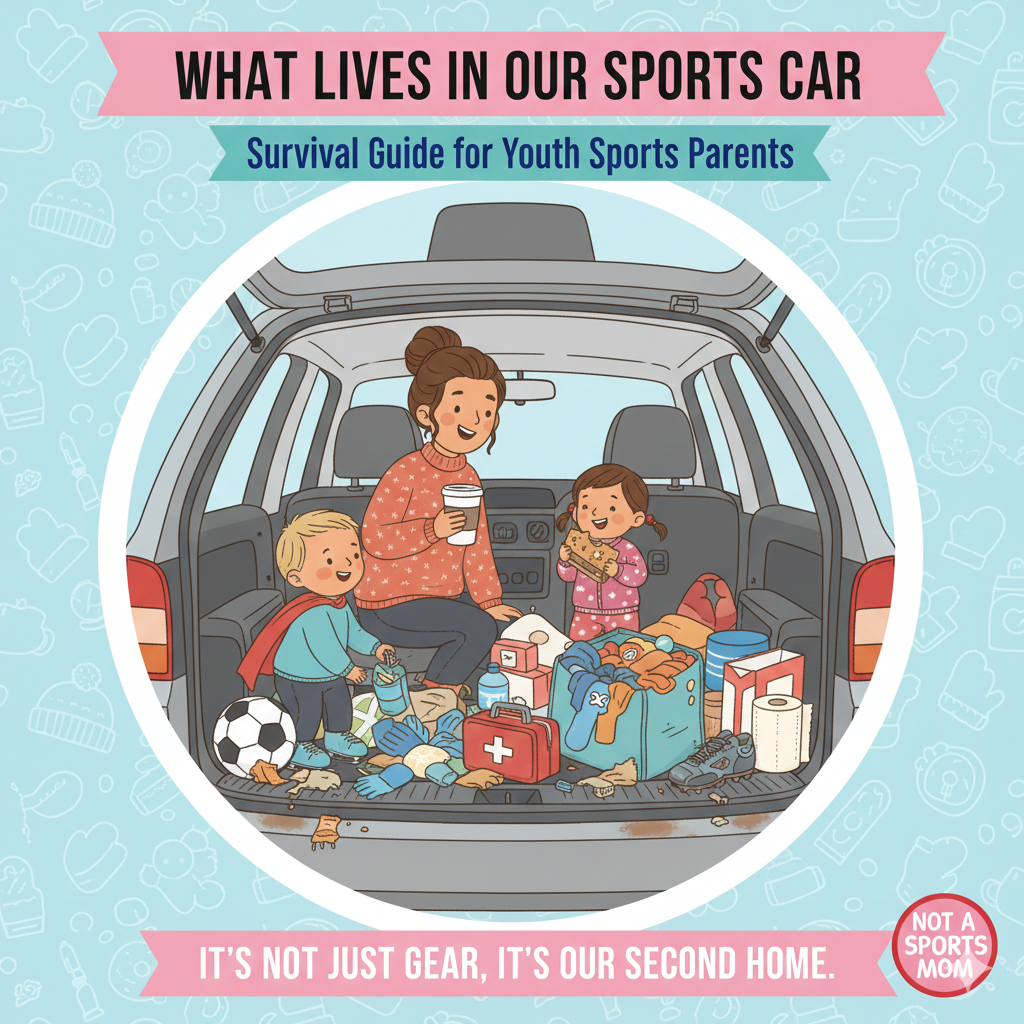
    Over time, I learned that packing once and staying packed is the only way to survive. Most sports families eventually develop:

    Youth sports aren’t forgiving when it comes to forgotten items, so being slightly over-prepared is actually a form of self-care.


    Balancing Sports, School, and Family Life
    (Imperfectly)

    Balancing youth sports with school, family time, and rest is one of the hardest parts — especially when practices fall right after school and evenings disappear quickly.

    What’s helped us most is accepting that balance doesn’t mean perfection. Some weeks are smooth. Others feel chaotic. Planning helps, but flexibility matters just as much.


    A few things that made a difference:

    • Shared calendars
    • Clear expectations around homework
    • Protecting at least one night a week with no activities
    • Letting go of guilt when everything doesn’t fit neatly

    Youth sports are just one season of life. They shouldn’t consume all of it.


    Managing Youth Sports Schedules
    (When You Don’t Know What Day It Is)

    Between practices, games, makeups, and weather changes, youth sports schedules can feel overwhelming fast.


    I’ve learned that managing schedules is less about being organized and more about building habits:

    • One place where everything lives (calendar, notes, reminders)
    • Bags packed ahead of time
    • Snacks ready before hunger hits
    • Accepting that you will occasionally show up on the wrong day

    And that’s okay.

    No one is keeping score on parenting logistics — even when it feels like they are.


    Finding Community in Youth Sports Parenting

    One unexpected gift of youth sports is the community.


    Standing on the sidelines week after week introduces you to other parents who are just as tired, confused, and invested as you are. Conversations start with the weather or the schedule, and before you know it, you’re swapping snack ideas or laughing about the same shared chaos.


    You don’t have to know everything to belong here. Showing up is enough.


    Why These Tips Matter

    This page — and this post — exist because youth sports can feel overwhelming, especially when you didn’t grow up in them.

    If you’ve ever:

    • Googled rules mid-game
    • Forgotten a bag (or two)
    • Sat in your car for a minute before going inside
    • Wondered if you’re doing any of this right


    You’re exactly where you’re supposed to be.


    Youth sports aren’t about being perfect. They’re about learning, trying, supporting, and growing — for kids and parents alike.

    Home » parenting
  • How We Survive Youth Sports Schedules (Even When I Don’t Know What Day It Is)

    How We Survive Youth Sports Schedules (Even When I Don’t Know What Day It Is)

    Youth Sports Scheduling: Where Time Loses All Meaning

    I used to think I was decent at keeping a schedule.

    I owned a calendar.
    I knew what day of the week it was.
    Dinner happened at normal hours.


    Then youth sports entered our lives, and now time is more of a suggestion than a rule.

    Between practices, lessons, and activities that somehow all overlap, I have fully accepted that I am no longer operating on a normal timeline. I am operating on youth sports time, which moves faster, changes without notice, and requires snacks at all times.

    This post contains affiliate links, which means I may earn a small commission at no cost to you. I only share products I actually use or think other parents will love.

    The Day I Missed Practice Because I Was Confidently Wrong

    There was a day I was absolutely sure practice was tomorrow.

    I had checked the schedule.
    I had mentally prepared.
    I had even planned snacks.

    Then my phone buzzed:
    “Hey, are you on your way?”

    I was not.
    I was home.
    Comfortable.
    Incorrect.

    That was the moment I realized something important: being on top of the schedule is optional — surviving it is not.


    Our Weekly Sports Lineup (A Real-Life Version)

    Right now, our week looks something like this:

    • After-school soccer one day a week
    • Swimming lessons one to two days a week — often right after school
      (Thankfully, he can go in by himself now, which feels like a small but meaningful parenting milestone. The swim bag stays packed with our go-to hooded towel, and a wet/dry bag because everything is always soaked.)
    • T-ball, which is about to start back up and will quickly take over multiple evenings
    • Ice skating, with very strong hopes of future hockey
    • Bike riding, squeezed in whenever there’s daylight and energy left

    On paper, it looks manageable.

    In real life, it looks like a lot of moving pieces — and a lot of bags.


    Why We Leave the Sports Bags Packed (and Visible)

    Early on, I tried unpacking bags after every practice.

    That phase did not last long.

    Now, each sport has its own dedicated bag, and they stay packed and ready:

    The bags live where we can see them — by the door or in the trunk — because if they disappear into a closet, they might as well not exist.

    Is it Pinterest-worthy?
    Absolutely not.

    Is it functional?
    Very.


    The Car Bag: Because One Bag Is Never Enough

    In addition to all the sport-specific bags, there is yet another bag that lives permanently in the car.

    This one is not for a sport.
    It’s for survival.

    Inside it you’ll find:

    This bag has saved us more times than I can count, and at this point, I trust it more than my memory.


    Snacks Are Not Optional — They Are a Strategy

    If there is one thing I have learned, it’s this:

    Snacks prevent problems.

    Not all problems.
    But enough of them to matter.

    Some of our go-to options:

    I always keep one for him — and one for me — because confused cheering is dehydrating work.

    There is zero shame in handing out snacks the second practice ends. Zero.


    Ice Skating Nights and the Slow Build Toward Hockey

    Ice skating nights feel especially ambitious.

    There’s cold air.
    There’s equipment.
    There’s timing that somehow always feels rushed.

    But watching him lace up (with help), step onto the ice, and try something hard makes it worth it. Even when it means juggling yet another bag and another evening commitment.


    What I’ve Learned About Managing Youth Sports Schedules

    Here’s the truth:

    • You will forget something.
    • You will mix up days.
    • You will feel behind.

    That doesn’t mean you’re doing it wrong.

    It means you’re parenting a kid with interests.

    If you’re looking for practical ways to make youth sports schedules feel more manageable, I’ve started collecting what actually helps on the Tips page, especially around navigating youth sports schedules without losing your mind.


    A Very Not a Sports Mom Takeaway

    I still don’t know what day it is half the time.
    I rely heavily on bags, snacks, and backup plans.
    And I absolutely still feel like I’m winging it.

    But my kid is trying new things.
    He’s moving his body.
    He feels supported.

    And honestly?

    That feels like enough.

    Home » parenting
  • The Olympics, According to My Kid (and Me, Who Knows Almost Nothing)

    The Olympics, According to My Kid (and Me, Who Knows Almost Nothing)

    Every four years, the Winter Olympics show up on TV and I’m reminded just how many sports exist that I do not fully understand.

    There are flags.
    There is dramatic music.

    There are athletes doing things that feel both incredibly impressive and mildly alarming.

    I love the Olympics — not because I know the rules, but because the vibes are elite.

    This year, though, the Olympics didn’t just show up on our TV.


    They took over our entire house.

    Because when you watch the Olympics with a toddler, you’re not just watching sports — you’re accidentally raising an athlete.

    This post contains affiliate links, which means I may earn a small commission at no cost to you. I only share products I actually use or think other parents will love.


    The Sports I Did Not Know Existed (But Now Narrate Loudly)

    The Winter Olympics are packed with sports I never grew up knowing about.

    There’s ski jumping, which feels like courage mixed with questionable decision-making.

    There’s luge and skeleton, which look like, “What if we went faster… but face first?”

    There’s curling, which seems suspiciously like aggressive housekeeping.

    And then there’s biathlon — skiing and shooting — because apparently one sport wasn’t enough.

    There are also those ice racing / ski cross events where multiple people fly downhill at once, jumping, crashing, and somehow surviving. I don’t know the rules. I just gasp.

    As a Not a Sports Mom, my job is mostly asking:

    • “Is this timed or judged?”
    • “Is that part of the plan?”
    • “Are they okay???”

    I do not always get answers.

    But my kid?
    He gets ideas.


    Suddenly, Our House Needed Equipment

    Not official Olympic-grade equipment — just things that could survive a toddler with confidence.

    The kids weightlifting set came out immediately, because apparently we’re training now. This is the same beginner set we already had, and it’s now been “competed” with daily ever since.
    👉 We use this Kids Complete Fitness Toy Set

    Then came the dramatic floor work. Rolling. Jumping. Falling. Celebrating.

    That’s where foam mats, balance toys, and anything that lets him move safely came in.
    👉 Balance Board
    👉 Balance Board Game
    👉 Indoor Obstacle Course


    The Swiffer Is No Longer a Cleaning Tool

    At some point during Olympic coverage, my kid decided the Swiffer had a higher calling.

    The Swiffer has officially been reassigned from cleaning duties to full-time Olympic support staff.

    Some days it’s a ski pole.

    Other days it’s part of speed skating warm-ups.
    During biathlon coverage, it became “the thing you ski with and hold.”

    Honestly? At least it’s keeping him moving.

    When we want something actually meant for sports, these get used constantly:
    👉 Hockey Indoor Set
    👉 Soft Foam Sports Balls
    👉 Goal Set


    He Has Joined a Hockey Team From the Living Room

    Hockey is a big one in our house. So when a game comes on, my kid doesn’t just watch — he joins.

    He grabs his hockey stick — the same one he insists is “just like the real ones” — and lines up directly in front of the TV.
    👉 American Flag Hockey Stick

    Sometimes he switches teams mid-period.
    Sometimes he announces he’s benched.
    Sometimes he celebrates a goal before it actually happens.

    We rotate between:
    👉 HOCKEY Shooting Practice Set
    👉 Hockey Shooting Tape Practice

    I nod supportively, like a coach who understands none of it.


    Luge, Skeleton, and the “Roller Coaster” Sport

    Then there’s luge. Or skeleton. Or whatever terrifying sled-based sport happens to be on.

    To my kid, this is not dangerous.

    This is a roller coaster.


    He lays flat on the floor, arms tight to his sides, whisper-yelling “GO FAST” while sliding approximately three inches.


    At one point, he lined up pillows into what he called “the track.”

    I let it happen because the alternative was explaining physics.

    For winter-inspired chaos, these help:
    👉 Sled
    👉 Scooter Board
    👉 Trampoline


    Curling: Aggressive Housekeeping, Toddler Edition

    Curling deserves its own moment.

    Watching grown adults slide stones across ice somehow convinced my kid this was very doable.

    We leaned into it with:
    👉 Indoor Hovering Curling Set
    👉 Tabletop Curling Game

    Still unclear on the rules. Very clear on the enthusiasm.


    The Olympics Are Also Apparently a Family Event

    In our house, Olympic athletes aren’t strangers — they’re people we know.

    My kid is fully convinced certain people in his life are competing.

    Uncle B?
    Obviously doing ski jump.

    No questions.
    It just makes sense.

    Sometimes he points at the screen and says, “That could be him.” And honestly? Sure. Why not.


    Playing Olympics Without Knowing the Rules

    You don’t need to know the rules to play Olympics at home.

    You just need:

    • A living room
    • Imagination
    • Objects that were absolutely not designed for sports
    • A willingness to clap enthusiastically at unclear moments

    We rotate constantly. Lifting. Hockey. Sliding. Jumping. Curling. Skiing with a Swiffer.

    It’s chaotic.
    It’s loud.
    It’s joyful.


    If You Want to Lean Into the Olympic Chaos

    What’s actually getting used in our house — not perfectly, not correctly, but enthusiastically:


    A Very Not a Sports Mom Takeaway

    I still don’t know the rules.
    I still cheer at questionable moments.
    I still don’t understand half of what’s happening on the screen.

    But watching my kid try everything — without fear of being bad at it — is kind of incredible.


    The Olympics in our house aren’t about medals.

    They’re about movement, imagination, and letting kids explore what they love.

    Even if that means your Swiffer becomes Olympic equipment.

    Home » parenting
  • ❄️ Winter Sports for Toddlers: How We Burn Energy When It’s Cold and Everyone Is Over It

    ❄️ Winter Sports for Toddlers: How We Burn Energy When It’s Cold and Everyone Is Over It

    Winter is confusing as a parent.

    It’s freezing outside.
    The sun sets at 4:30pm.
    And yet… your toddler still wakes up every morning ready to move.

    I don’t know who decided kids should have peak energy during the coldest, darkest months of the year — but here we are.

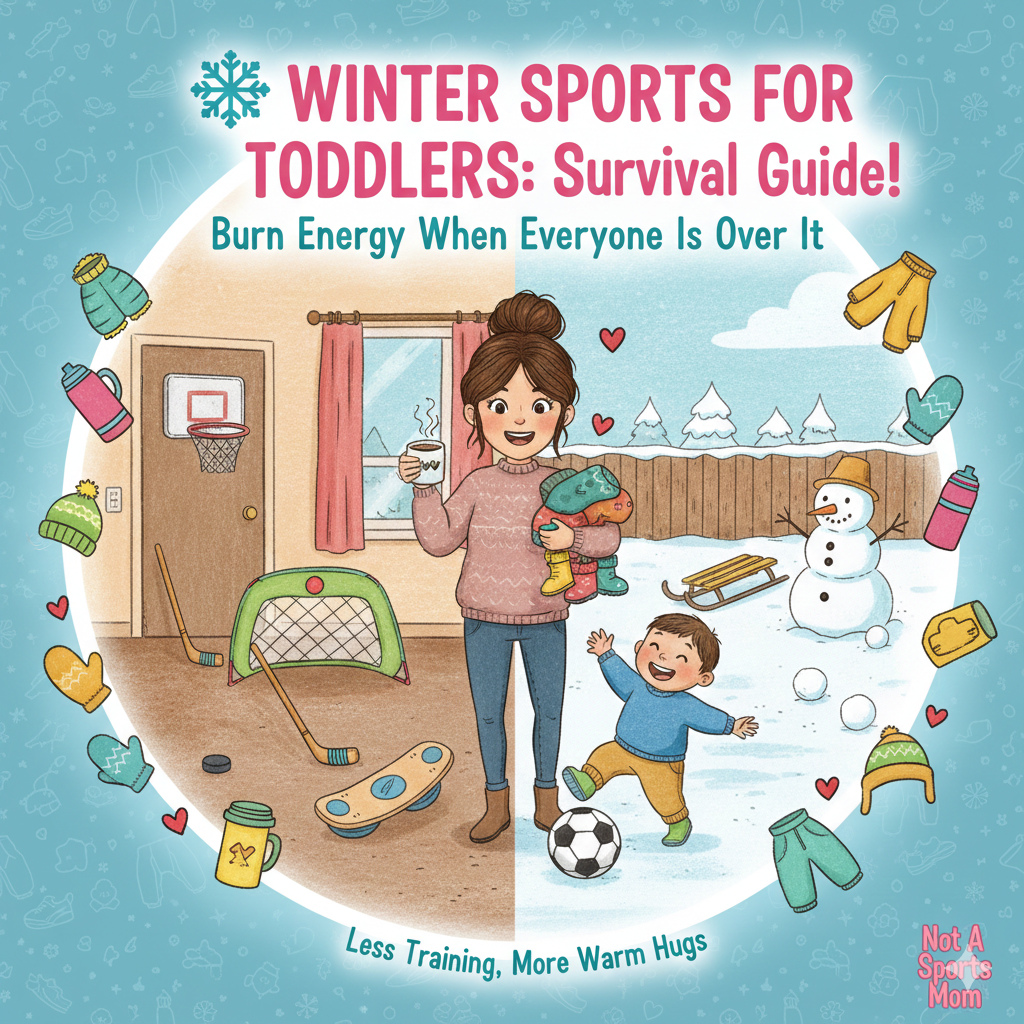
    As a Not a Sports Mom, winter sports look a little different in our house. They’re less about rules and more about survival. Less “training” and more “please run around before bedtime.”

    Here’s what’s actually worked for us — both indoors and outdoors — when winter hits and staying active feels harder than it should.

    This post contains affiliate links, which means I may earn a small commission at no cost to you. I only share products I actually use or think other parents will love.

    Indoor Sports (Because Sometimes Going Outside Is Just Not Happening)

    Let’s start with the days when:

    • it’s too cold
    • it’s raining sideways
    • or you simply don’t have it in you

    🏀 Indoor Basketball (Hallway Edition)

    At some point, I accepted that our hallway is now a sports facility.

    A basketball hoop and a soft foam ball turn five minutes of setup into a solid 20 minutes of running, throwing, missing wildly, and celebrating anyway.

    Do I know the rules?
    No.
    Do I know it burns energy?
    Yes.


    ⚽ Indoor Soccer (Low Stakes, High Chaos)

    Indoor soccer with toddlers is mostly just running in circles with a ball — and honestly, that’s enough.

    We use:

    I don’t call drills. I just say, “Can you kick it over there?” and hope for the best.


    🏒 Floor Hockey (Same Dream, Less Ice)

    After attending enough hockey games, my toddler decided ice hockey was the goal.

    Ice was not happening.

    So we compromised with:

    It’s loud. It’s chaotic. But it scratches the itch without frostbite.


    “Winter Sports” Without the Winter Part

    Some sports don’t require snow — just balance and enthusiasm.

    ⛷️ Balance Practice (Pretend Ski Training)

    I’ve learned that toddlers don’t care if something is “technically correct.”

    A balance board (without screen time), a balance board game, or stepping stones become ski training in their minds.
    Scooters indoors (with rules) count too.

    Does this prepare them for the Olympics?
    Unclear.
    Does it help with coordination?
    Absolutely.


    🧘 Movement That Isn’t a Sport (But Saves the Day)

    Some days we need calmer movement.

    This is where kids yoga cards, stretch bands, or indoor obstacle courses come in.

    I call it “movement.”
    They call it “playing.”
    Everyone wins.


    Outdoor Winter Sports (When You Brave the Cold)

    When the weather is cold but manageable, getting outside still matters — even if it’s short.

    ❄️ Snow Sports for Toddlers

    Snow turns everything into a sport:

    • kicking a soccer ball through snow
    • throwing snowballs at a target
    • pulling a sled (which definitely counts as conditioning)

    The key here isn’t duration — it’s layers.

    Warm gloves, snow pants, and waterproof boots (👉 add links here) make all the difference between fun and meltdown.


    What I’ve Learned as a Not a Sports Mom in Winter

    Winter sports don’t need to look impressive.
    They don’t need rules.
    They don’t need perfect form.

    They just need:

    • movement
    • consistency
    • and a willingness to redefine what “counts”

    Because burning energy matters more than knowing the playbook.


    What Actually Helped Us (For Fellow Winter Survivors)

    If you’re staring down winter with an active toddler, these are the things that genuinely helped us:

    No pressure. No must-haves. Just options.


    Final Thoughts From the Cold Sidelines

    You don’t need to know sports to raise an active kid in winter.

    You just need:

    • flexibility
    • creativity
    • and realistic expectations

    If movement happens — even in small bursts — you’re doing it right.


    ❄️ Your Turn

    What do winter sports look like in your house?
    Indoor chaos? Backyard snow games?
    Tell me — I’m always taking notes.

    Home » parenting

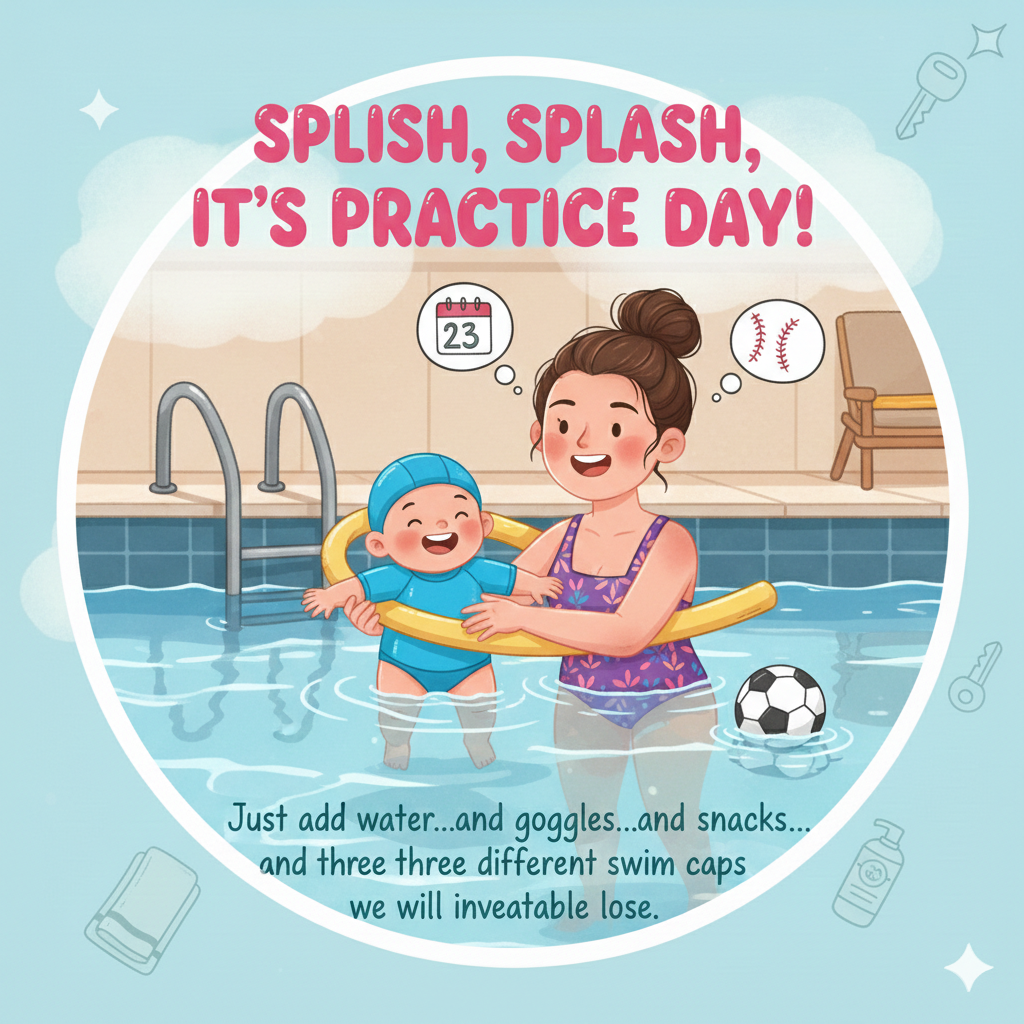
  • First Swim Lesson: How I Learned We’re All Just Swimming in Baby Pee

    First Swim Lesson: How I Learned We’re All Just Swimming in Baby Pee

    There are certain parenting milestones no one truly prepares you for.

    The first time your baby sleeps through the night.
    The first public meltdown.


    And, apparently, the first swim lesson — which is less “adorable bonding moment” and more “why are we all being observed like exotic mammals?”

    If you’ve never taken a baby or toddler to swim lessons, let me set the scene.

    You, your child, and roughly ten other parents are herded into a humid indoor pool. There is nowhere to hide. The walls are glass. People are watching. Some are smiling. Some are clearly judging your choice of swimsuit. All of them are pretending not to notice that we are collectively soaking in whatever is happening inside those tiny swim diapers.

    Welcome to swim class.

    This post contains affiliate links, which means I may earn a small commission at no cost to you. I only share products I actually use or think other parents will love.

    The Swim Diaper Delusion

    Before we even got in the water, I was confident. Prepared. Organized.

    Because I had done the thing you’re told to do.

    Double swim diapers.

    One disposable. One reusable.
    Locked. Loaded. Fort Knox, but for bodily fluids.

    I felt smug.
    I felt safe.
    I felt like a responsible adult.

    And then — within minutes of entering the pool — I had the horrifying realization that no one tells you loud enough:

    Swim diapers do not hold pee.

    Not one of them.
    Not two of them together.
    Not even if you whisper encouraging words to them.

    They are there for other things. And even then… let’s be honest… it’s a hope-and-a-prayer situation.

    So there I was, standing in chest-deep water, smiling at my kid, while my brain
    whispered:
    We are absolutely swimming in baby pee.

    Not just my baby’s.
    Everyone’s.

    Suddenly, the goggles made sense.


    The Zoo Exhibit Effect

    If the pee realization doesn’t get you, the glass walls will.

    Because swim lessons are apparently designed so spectators can watch from the outside like they’re visiting an aquarium.

    Parents. Grandparents. Random passersby.
    All pressed up against the glass.

    Watching.

    You.

    Trying to sing songs.
    Bounce your baby.
    Pretend this is normal.

    I have never felt more like a zoo animal in my life.

    Observe the First-Time Swim Parent in their natural habitat.
    Note the forced smile.
    The panic behind the eyes.
    The quiet calculation of how fast they can escape after the lesson ends.


    The Constant Fear of “The Incident”

    Every parent in that pool is carrying the same unspoken fear.

    Not drowning.
    Not splashing.

    Pooping.

    You’re smiling.
    You’re encouraging.
    But deep down, you’re watching your child like a hawk, thinking:

    Is that face concentration or is that… something else?

    Every bubble feels suspicious.
    Every pause feels dangerous.

    And yet, no one says anything.
    Because acknowledging it out loud feels like tempting fate.


    The Outfit Situation No One Warns You About

    Let’s talk swimsuits.

    Because finding a swimsuit for this phase of parenting is its own emotional journey.

    You want something:

    • Appropriate
    • Comfortable
    • Secure
    • That doesn’t make you feel like you’re wearing a costume you didn’t audition for

    You’re bending. Lifting. Holding a slippery baby.
    You don’t need straps failing or fabric shifting at the wrong moment.

    This is not the time for:

    • Anything strapless
    • Anything overly complicated
    • Anything that makes you constantly adjust

    You want functional confidence.
    “I can survive this class” energy.

    And yet, no matter what you wear, you’ll still feel a little weird — because again — glass walls.


    The 30-Minute Class That Requires an Olympic-Level Outfit Change

    For a class that lasts thirty minutes, the amount of changing involved is truly offensive.

    Wet baby.
    Wet parent.
    Tiny changing room.
    Nowhere to put anything.

    You peel off wet layers like you’re escaping a situation, not leaving a pool.

    Your baby suddenly has:

    • Zero interest in cooperating
    • Maximum interest in flailing
    • A newfound ability to turn boneless

    You leave damp.
    You smell like chlorine.
    You’re not sure if everything made it back into the bag.

    But hey — you did it.

    Emotional recovery involved:


    And Somehow… It’s Still Worth It

    Because here’s the thing.

    Even through the awkwardness.
    The pee thoughts.
    The glass walls.
    The outfit stress.

    Your kid is learning something important.

    They’re getting comfortable in the water.
    They’re building confidence.
    They’re learning trust — in you, in themselves, in their body.

    And you’re showing up.

    Even if you feel ridiculous.
    Even if you feel watched.
    Even if you spend the whole class mentally counting down until towel time.

    Sometimes parenting means doing things that feel uncomfortable for us because they’re good for them.

    Even if it means feeling like a zoo exhibit.
    Even if it means swimming in baby pee.
    Even if it means changing wet clothes for a class shorter than an episode of Bluey.


    Final Thought From the Sidelines

    You don’t have to love swim lessons.
    You don’t have to feel confident doing them.
    You just have to show up.

    Your kid won’t remember the pee.
    Or the glass walls.
    Or your internal panic.

    They’ll remember the water.
    The fun.
    And the fact that you were right there with them.

    And honestly?
    That’s a win.

    What Actually Helped

    (From One Over prepared Parent to Another)

    If you’re heading into your first swim lesson and feeling unsure, here’s what genuinely made it less chaotic for us:

    No pressure. No must-haves. Just the things that saved my sanity.

    🏊‍♀️ Your Turn:

    Did your kid love swim lessons? Hate them? Attempt a dramatic escape?
    Tell me your first swim class story — bonus points if it involves a locker room meltdown.


    Home » parenting
  • About the Blog: Not a Sports Mom

    About the Blog: Not a Sports Mom

    Cheering loudly. Understanding… well, we’re working on it.

    This post contains affiliate links, which means I may earn a small commission at no cost to you. I only share products I actually use or think other parents will love.

    Welcome to Not a Sports Mom

    Welcome to Not a Sports Mom — the corner of the internet for every parent who has ever sat on a sideline thinking, “Wait… why did the ref blow the whistle this time?”

    If you’ve ever googled rules during a game, cheered at the wrong moment, or nodded along in a sideline conversation you absolutely did not understand, squinted at a field wondering what just happened, clapped a second too late, or nodded through a sideline conversation about “defense formations” you didn’t fully follow — you belong here.
    You’re in the right place.
    Actually, you’re home.


    Welcome to Not a Sports Mom

    Not a Sports Mom is a humor-filled, heart-forward space for parents raising sports-loving kids despite having zero sports background themselves. Because loving your kid and knowing the rules are two very different job descriptions.

    Here, we celebrate:

    • the chaotic charm of early-morning games
    • the confusion that comes with whistles, refs, and sports terms
    • the pride you feel watching your kid shine (even if you don’t know the score)
    • and the hilarious, relatable learning curve of becoming a “sports mom” by accident

    Grab your iced coffee, claim your sideline chair, and come laugh with the rest of us who are just doing our best out there.

    You don’t need to know the plays to show up for your kid.

    You just need a sense of humor — and maybe a snack bag.


    Hi, I’m Lisa — a proud mom, an enthusiastic cheer-er, and a deeply confused human when it comes to sports.

    I never grew up playing leagues, studying stats, or color-coding practice schedules. But here I am, raising a sports-obsessed kid whose idea of fun is talking about positions, his favorite teams and players, plays, and rules I’ve never even heard of.

    So this blog is my story:
    A mom who’s navigating youth sports with love, humor, and absolutely no clue what’s happening on the field.


    Why This Blog Exists

    Because not every mom on the sidelines grew up as an athlete.
    Because loving your kid and knowing the rules are two very different skill sets.
    And because there are millions of us out here just trying our best while pretending we understand what “offsides” means.

    Not a Sports Mom is here to:

    • make you laugh
    • make you feel seen
    • celebrate the chaos of learning sports through your kid
    • remind you that you don’t need to be a sports expert to be an amazing sports parent

    What You’ll Find Here

    Sideline Stories

    True tales of confusion, chaos, and the moments that make youth sports unforgettable.

    Beginner Guides (Written by a Beginner)

    Think: “explain it to me like I’m five,” (but my five-year-old knows more than me) but funnier.

    Sports-Mom Fails

    Because if you can’t laugh at yourself cheering for the wrong team, what can you laugh at?

    The Emotional Rollercoaster

    Pride, panic, joy, confusion — usually all within the same 60 seconds.

    Learning Moments

    Spoiler: my child teaches me more about sports than I ever taught him.


    My Philosophy

    You don’t need a background in sports to show up, support your kid, and build memories that last forever.

    You just need:

    • a folding chair that’s survived at least one season
    • a snack bag (because hunger makes everything worse)
    • sunscreen you’ll forget to apply until it’s too late
    • a willingness to embarrass yourself
    • a water bottle (for you) and your kid that actually stays cold
    • and a heart big enough to cheer even when you’re not totally sure what’s happening

    If You’re a “Not a Sports Mom” Too…

    You’re not alone.
    You’re not behind.
    And you’re definitely not doing it wrong.

    You’re just parenting in the wildest, funniest, most unexpectedly rewarding arena of all: youth sports.

    Grab a seat on the sidelines — let’s figure it out together.
    And probably laugh a whole lot along the way.

    Sideline Survival Basics (From Experience, Not Expertise)

    Over time, I’ve learned that you don’t need to know the rules — but you do need a few basics if you’re going to survive youth sports:

    • A folding chair that doesn’t dig into your legs
    • A snack bag that can handle both kids and parents
    Sunscreen, even on cloudy days. I started to keep the travel size in my car
    • A water bottle for you and for the athlete that stays cold through the second half
    • A portable phone charger, because of all the photos and videos.

    None of this makes you a sports expert — but it does make you a prepared sideline parent.

    Home » parenting