Category: Tips

Tips about being a sports mom with no clue

  • Beginner’s Sports Guide for Parents Who Don’t Know Much about Sports

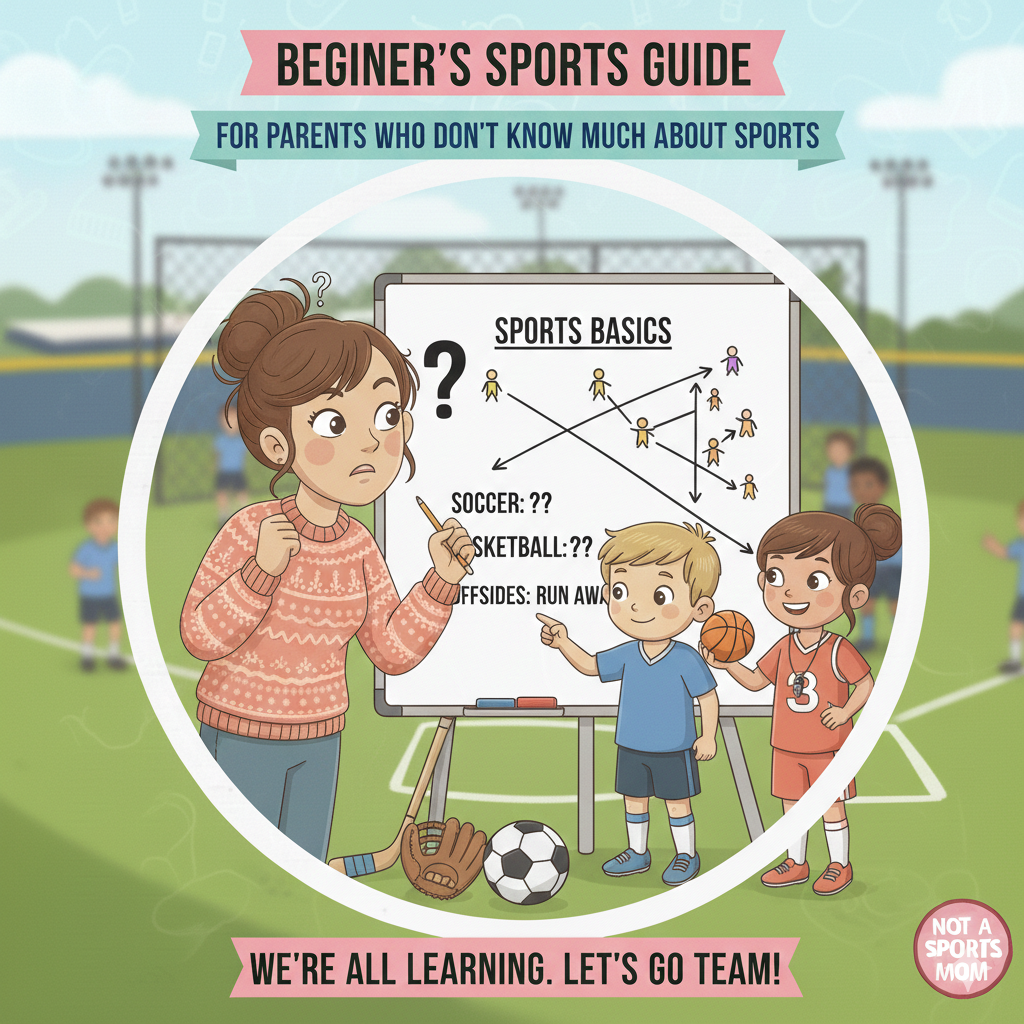
    Beginner’s Sports Guide for Parents Who Don’t Know Much about Sports

    Skill building, exploring, and not overspending in the early years

    Even though I grew up cheerleading and skiing, team sports culture feels like a completely different world.


    Cheer had routines and repetition. Skiing was individual and seasonal. But soccer practice? Hockey drills? Rotating positions? That’s new territory.


    So when we first dipped our toes into youth sports, I kept reminding myself: this doesn’t have to start big.


    When kids are little, sports should look like play.

    Before leagues.
    Before uniforms.

    Before standing in a field wondering why everyone else seems to know which direction to run.


    One of the best early decisions we made was focusing on balance and coordination first. A Strider bike helped build confidence without the pressure of learning pedals right away.

    It wasn’t about becoming competitive. It was about letting my child trust their body — something I knew mattered from skiing, even if the sport itself was different.

    This post contains affiliate links. That means I may earn a small commission (at no extra cost to you) if you choose to purchase through them. I only share products we’ve used, loved, or genuinely found helpful in our own sports journey.

    Let Them Explore (Even If You Don’t Understand the Sport Yet)

    There’s something humbling about watching your child get excited about a sport you don’t fully understand.


    I can break down cheer counts in my sleep. I can explain ski lifts and green runs. But ask me about formations in soccer or line changes in hockey? I’m Googling.


    So instead of trying to steer them toward what I knew, I let them explore.

    We started simple — backyard play with soft foam sports balls.

    Kicking. Throwing. Missing. Laughing.

    No structure. No whistle. No sideline pressure.

    And I realized something important: they don’t need me to be an expert. They just need me to create space to try.

    Some weeks, they wanted soccer.
    Some weeks, they wanted to race bikes.
    Some weeks, they invented games that made absolutely no sense but involved a lot of running.

    Exploration isn’t lack of commitment. It’s skill building in disguise.


    Don’t Overspend Early (Especially When You’re Still Figuring It Out)

    When you didn’t grow up in team sports, it’s easy to assume you need all the gear immediately. Because everyone else seems prepared.

    But early on, you’re not investing in a long-term sport — you’re investing in exposure.

    Instead of diving into expensive equipment, we leaned into simple tools that supported movement and coordination.


    A kid’s complete fitness toy set turned our driveway into an obstacle course.

    Mini hurdles. Cones. Balance work. All the things that quietly build athletic skills without labeling them as “training.”

    We added a simple soccer goal set in the backyard.

    Not for competition — just for practice kicks after school while I started dinner.

    Those small, low-pressure moments built more confidence than any official league sign-up could have at that age.


    Skill Building Through Play (Even If It’s Not Your Sport)

    One thing cheerleading and skiing did teach me is that foundational skills matter more than early specialization.

    Balance.
    Coordination.
    Endurance.
    Listening.
    Resilience.

    Those translate across sports.

    So even if I don’t understand every rule in hockey or soccer, I understand effort. I understand practice. I understand falling down and getting back up.

    That’s what I focus on now.

    Not whether they’re ahead.
    Not whether they’re the best on the field.
    But whether they’re building skills that will serve them long-term.


    When Organized Sports Enter the Picture

    Eventually, the backyard turns into sign-up forms.

    And that’s when imposter syndrome can creep in.

    Other parents seem fluent in the language of drills and positions. Coaches use terminology like everyone should know it.

    That’s usually when I smile, nod, and Google later.

    And it’s okay.

    You don’t have to share your child’s exact sports background to support them in it.

    You just have to show up.


    The Part That Surprised Me Most

    The emotional side of youth sports is universal — no matter what you grew up playing.

    The first fall.
    The first loss.
    The first proud moment when something clicks.

    Those feelings don’t require rule knowledge.

    They require presence.

    And maybe a snack.


    You Don’t Have to Be an Expert in Their Sport

    You can have a background in cheer and skiing and still feel completely out of your depth at a hockey rink.

    You can understand athletic discipline but not know when to clap.

    You can be athletic-adjacent and still feel new here.

    The good news?

    Your child doesn’t need you to know everything about their sport.

    They need you to:

    • Encourage them
    • Let them explore
    • Avoid overspending before they’re ready
    • Celebrate effort over performance

    And trust that confidence grows slowly — one backyard kick, one practice, one slightly confusing game at a time.


    Home » Tips

  • Essential Tips for Youth Sports Parents (From Someone Who’s Still Figuring It Out)

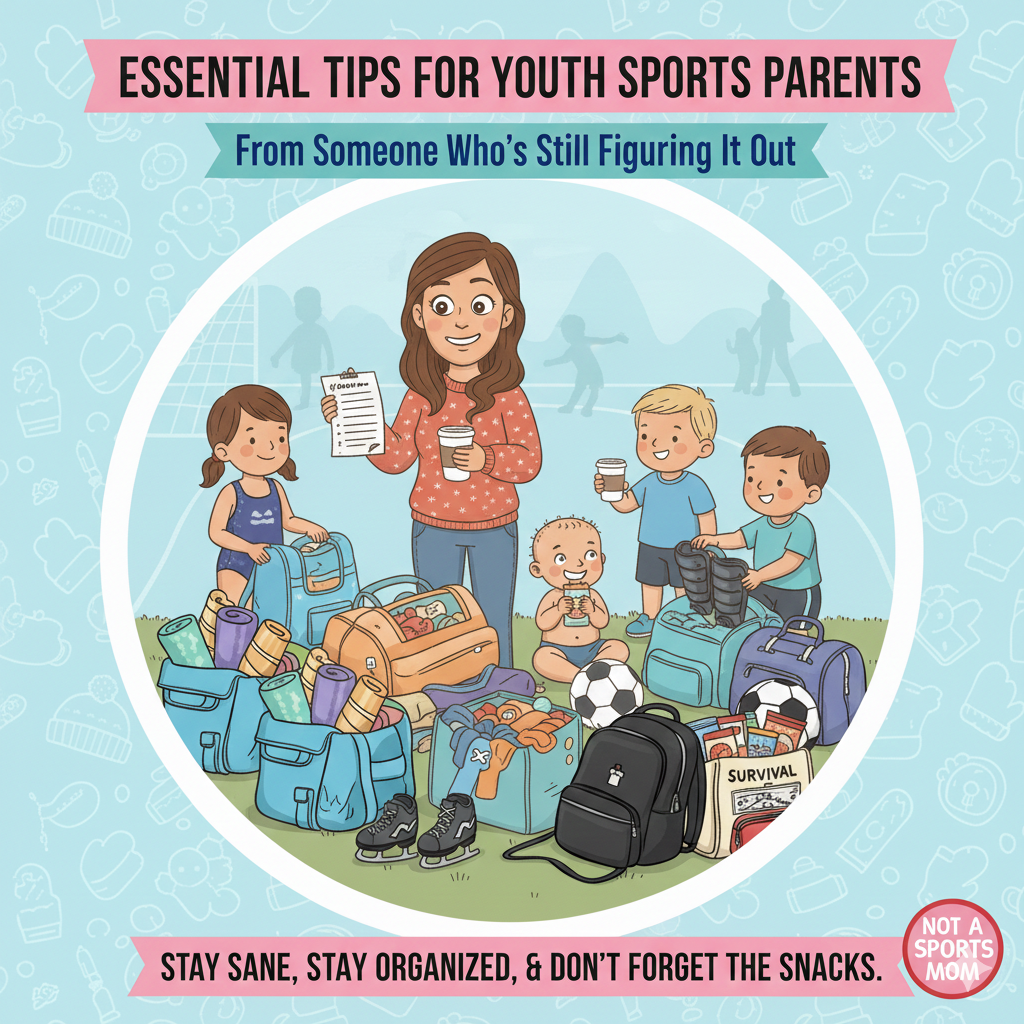
    Essential Tips for Youth Sports Parents (From Someone Who’s Still Figuring It Out)

    Real-life advice from a mom learning sports alongside her kid

    Youth sports sound simple until you’re actually living them.


    Before kids, I thought youth sports meant showing up once or twice a week, clapping politely, and maybe bringing a snack. What I didn’t realize was that youth sports would quietly become a full-blown lifestyle. One that involves juggling schedules, hauling gear, decoding rules I never learned, and managing very big emotions in very small bodies.


    I didn’t grow up a sports person. I wasn’t a “sports mom” by nature. And yet here I am, learning hockey rules from YouTube, Googling “what size shin guards does a kid need,” and trying to remember which jersey is clean right now.


    That’s why I started Not a Sports Mom — not as an expert, but as someone figuring it out in real time.


    This post pulls together the most important lessons I’ve learned so far. These aren’t professional opinions or coaching advice. They’re real-life tips from the sidelines, the living room floor, and the car ride home — especially for parents who feel like they’re learning youth sports alongside their kid.

    This post contains affiliate links. If you purchase through these links, I may earn a small commission at no extra cost to you. I only recommend products we actually use or would use ourselves.

    Youth Sports for Beginners: Where to Start (When You Don’t Know Anything)

    One of the first questions I hear from parents is:
    “What’s the best youth sport for beginners?”

    The honest answer? The best beginner sport is the one that:

    • Welcomes new kids
    • Focuses on fun over performance
    • Teaches basic movement and teamwork
    • Doesn’t require you to already know the rules
    • One that your kid is interested in and or curious about

    Sports like soccer, T-ball, basketball, and swimming tend to be great entry points. They introduce structure without overwhelming kids (or parents), and they help build confidence early.


    More importantly, your child doesn’t need to “be good” to start. Youth sports at this stage are about learning how to try, how to lose, how to listen, and how to keep going even when it’s hard.


    And for parents? It’s about learning that it’s okay to ask questions — sometimes a lot of them.


    Supporting Your Child
    (Without Turning It Into Pressure)

    Supporting your child in sports sounds straightforward — until emotions enter the picture.


    Kids take games personally. Missed goals feel devastating. Losing can feel unfair. And sometimes the car ride home is quieter than you expected.


    One of the biggest lessons I’ve learned is that support doesn’t mean coaching from the sidelines or correcting every mistake. It means:

    • Showing up consistently
    • Letting them talk (or not talk) afterward
    • Celebrating effort, not outcomes
    • Reminding them that one game doesn’t define them

    Some days, support looks like cheering. Other days, it looks like sitting quietly with a snack and letting the moment pass.


    What to Pack for Youth Sports
    (So You’re Not Scrambling)

    If there’s one universal truth about youth sports, it’s this:
    You will forget something — unless you build a system.

    Over time, I learned that packing once and staying packed is the only way to survive. Most sports families eventually develop:

    Youth sports aren’t forgiving when it comes to forgotten items, so being slightly over-prepared is actually a form of self-care.


    Balancing Sports, School, and Family Life
    (Imperfectly)

    Balancing youth sports with school, family time, and rest is one of the hardest parts — especially when practices fall right after school and evenings disappear quickly.

    What’s helped us most is accepting that balance doesn’t mean perfection. Some weeks are smooth. Others feel chaotic. Planning helps, but flexibility matters just as much.


    A few things that made a difference:

    • Shared calendars
    • Clear expectations around homework
    • Protecting at least one night a week with no activities
    • Letting go of guilt when everything doesn’t fit neatly

    Youth sports are just one season of life. They shouldn’t consume all of it.


    Managing Youth Sports Schedules
    (When You Don’t Know What Day It Is)

    Between practices, games, makeups, and weather changes, youth sports schedules can feel overwhelming fast.


    I’ve learned that managing schedules is less about being organized and more about building habits:

    • One place where everything lives (calendar, notes, reminders)
    • Bags packed ahead of time
    • Snacks ready before hunger hits
    • Accepting that you will occasionally show up on the wrong day

    And that’s okay.

    No one is keeping score on parenting logistics — even when it feels like they are.


    Finding Community in Youth Sports Parenting

    One unexpected gift of youth sports is the community.


    Standing on the sidelines week after week introduces you to other parents who are just as tired, confused, and invested as you are. Conversations start with the weather or the schedule, and before you know it, you’re swapping snack ideas or laughing about the same shared chaos.


    You don’t have to know everything to belong here. Showing up is enough.


    Why These Tips Matter

    This page — and this post — exist because youth sports can feel overwhelming, especially when you didn’t grow up in them.

    If you’ve ever:

    • Googled rules mid-game
    • Forgotten a bag (or two)
    • Sat in your car for a minute before going inside
    • Wondered if you’re doing any of this right


    You’re exactly where you’re supposed to be.


    Youth sports aren’t about being perfect. They’re about learning, trying, supporting, and growing — for kids and parents alike.

    Home » Tips