Tag: sports parent problems

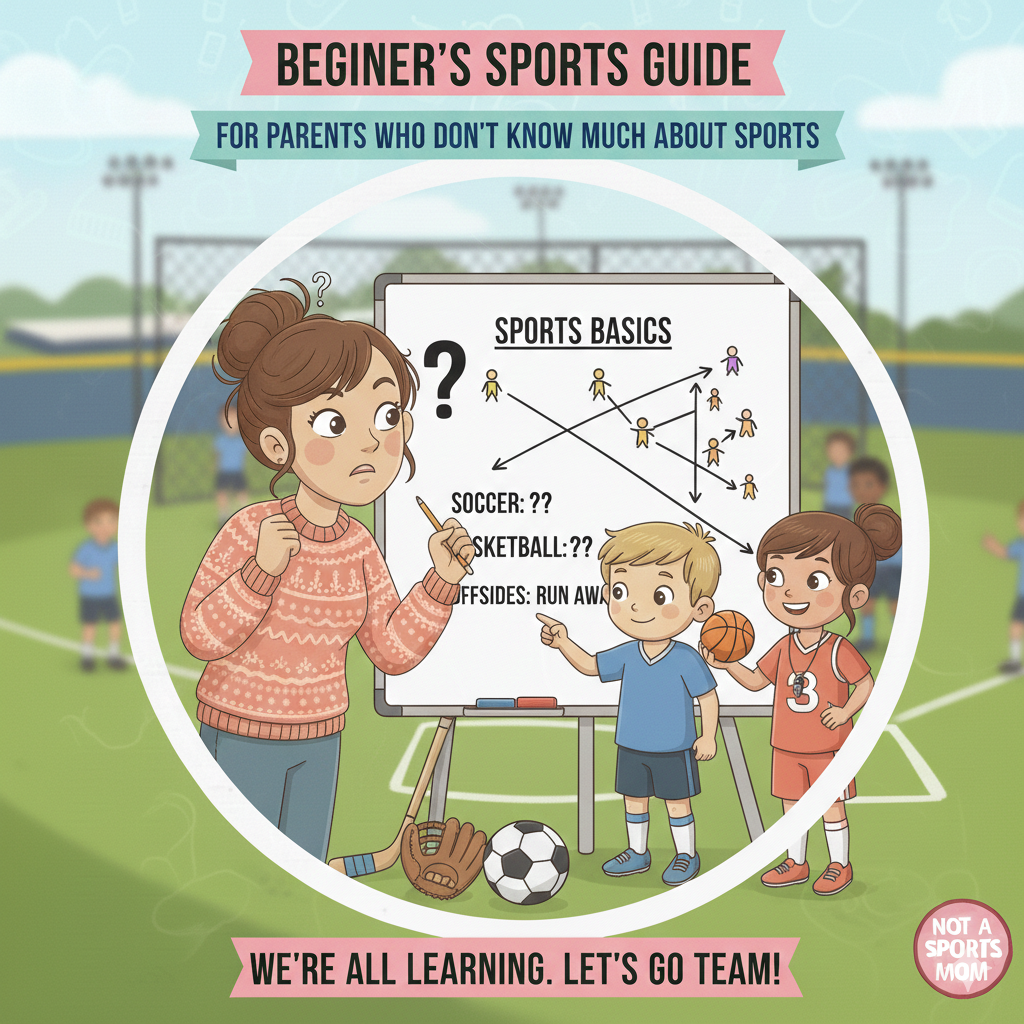
  • Beginner’s Sports Guide for Parents Who Don’t Know Much about Sports

    Beginner’s Sports Guide for Parents Who Don’t Know Much about Sports

    Skill building, exploring, and not overspending in the early years

    Even though I grew up cheerleading and skiing, team sports culture feels like a completely different world.


    Cheer had routines and repetition. Skiing was individual and seasonal. But soccer practice? Hockey drills? Rotating positions? That’s new territory.


    So when we first dipped our toes into youth sports, I kept reminding myself: this doesn’t have to start big.


    When kids are little, sports should look like play.

    Before leagues.
    Before uniforms.

    Before standing in a field wondering why everyone else seems to know which direction to run.


    One of the best early decisions we made was focusing on balance and coordination first. A Strider bike helped build confidence without the pressure of learning pedals right away.

    It wasn’t about becoming competitive. It was about letting my child trust their body — something I knew mattered from skiing, even if the sport itself was different.

    This post contains affiliate links. That means I may earn a small commission (at no extra cost to you) if you choose to purchase through them. I only share products we’ve used, loved, or genuinely found helpful in our own sports journey.

    Let Them Explore (Even If You Don’t Understand the Sport Yet)

    There’s something humbling about watching your child get excited about a sport you don’t fully understand.


    I can break down cheer counts in my sleep. I can explain ski lifts and green runs. But ask me about formations in soccer or line changes in hockey? I’m Googling.


    So instead of trying to steer them toward what I knew, I let them explore.

    We started simple — backyard play with soft foam sports balls.

    Kicking. Throwing. Missing. Laughing.

    No structure. No whistle. No sideline pressure.

    And I realized something important: they don’t need me to be an expert. They just need me to create space to try.

    Some weeks, they wanted soccer.
    Some weeks, they wanted to race bikes.
    Some weeks, they invented games that made absolutely no sense but involved a lot of running.

    Exploration isn’t lack of commitment. It’s skill building in disguise.


    Don’t Overspend Early (Especially When You’re Still Figuring It Out)

    When you didn’t grow up in team sports, it’s easy to assume you need all the gear immediately. Because everyone else seems prepared.

    But early on, you’re not investing in a long-term sport — you’re investing in exposure.

    Instead of diving into expensive equipment, we leaned into simple tools that supported movement and coordination.


    A kid’s complete fitness toy set turned our driveway into an obstacle course.

    Mini hurdles. Cones. Balance work. All the things that quietly build athletic skills without labeling them as “training.”

    We added a simple soccer goal set in the backyard.

    Not for competition — just for practice kicks after school while I started dinner.

    Those small, low-pressure moments built more confidence than any official league sign-up could have at that age.


    Skill Building Through Play (Even If It’s Not Your Sport)

    One thing cheerleading and skiing did teach me is that foundational skills matter more than early specialization.

    Balance.
    Coordination.
    Endurance.
    Listening.
    Resilience.

    Those translate across sports.

    So even if I don’t understand every rule in hockey or soccer, I understand effort. I understand practice. I understand falling down and getting back up.

    That’s what I focus on now.

    Not whether they’re ahead.
    Not whether they’re the best on the field.
    But whether they’re building skills that will serve them long-term.


    When Organized Sports Enter the Picture

    Eventually, the backyard turns into sign-up forms.

    And that’s when imposter syndrome can creep in.

    Other parents seem fluent in the language of drills and positions. Coaches use terminology like everyone should know it.

    That’s usually when I smile, nod, and Google later.

    And it’s okay.

    You don’t have to share your child’s exact sports background to support them in it.

    You just have to show up.


    The Part That Surprised Me Most

    The emotional side of youth sports is universal — no matter what you grew up playing.

    The first fall.
    The first loss.
    The first proud moment when something clicks.

    Those feelings don’t require rule knowledge.

    They require presence.

    And maybe a snack.


    You Don’t Have to Be an Expert in Their Sport

    You can have a background in cheer and skiing and still feel completely out of your depth at a hockey rink.

    You can understand athletic discipline but not know when to clap.

    You can be athletic-adjacent and still feel new here.

    The good news?

    Your child doesn’t need you to know everything about their sport.

    They need you to:

    • Encourage them
    • Let them explore
    • Avoid overspending before they’re ready
    • Celebrate effort over performance

    And trust that confidence grows slowly — one backyard kick, one practice, one slightly confusing game at a time.


    Home » sports parent problems

  • How We Survive Youth Sports Schedules (Even When I Don’t Know What Day It Is)

    How We Survive Youth Sports Schedules (Even When I Don’t Know What Day It Is)

    Youth Sports Scheduling: Where Time Loses All Meaning

    I used to think I was decent at keeping a schedule.

    I owned a calendar.
    I knew what day of the week it was.
    Dinner happened at normal hours.


    Then youth sports entered our lives, and now time is more of a suggestion than a rule.

    Between practices, lessons, and activities that somehow all overlap, I have fully accepted that I am no longer operating on a normal timeline. I am operating on youth sports time, which moves faster, changes without notice, and requires snacks at all times.

    This post contains affiliate links, which means I may earn a small commission at no cost to you. I only share products I actually use or think other parents will love.

    The Day I Missed Practice Because I Was Confidently Wrong

    There was a day I was absolutely sure practice was tomorrow.

    I had checked the schedule.
    I had mentally prepared.
    I had even planned snacks.

    Then my phone buzzed:
    “Hey, are you on your way?”

    I was not.
    I was home.
    Comfortable.
    Incorrect.

    That was the moment I realized something important: being on top of the schedule is optional — surviving it is not.


    Our Weekly Sports Lineup (A Real-Life Version)

    Right now, our week looks something like this:

    • After-school soccer one day a week
    • Swimming lessons one to two days a week — often right after school
      (Thankfully, he can go in by himself now, which feels like a small but meaningful parenting milestone. The swim bag stays packed with our go-to hooded towel, and a wet/dry bag because everything is always soaked.)
    • T-ball, which is about to start back up and will quickly take over multiple evenings
    • Ice skating, with very strong hopes of future hockey
    • Bike riding, squeezed in whenever there’s daylight and energy left

    On paper, it looks manageable.

    In real life, it looks like a lot of moving pieces — and a lot of bags.


    Why We Leave the Sports Bags Packed (and Visible)

    Early on, I tried unpacking bags after every practice.

    That phase did not last long.

    Now, each sport has its own dedicated bag, and they stay packed and ready:

    The bags live where we can see them — by the door or in the trunk — because if they disappear into a closet, they might as well not exist.

    Is it Pinterest-worthy?
    Absolutely not.

    Is it functional?
    Very.


    The Car Bag: Because One Bag Is Never Enough

    In addition to all the sport-specific bags, there is yet another bag that lives permanently in the car.

    This one is not for a sport.
    It’s for survival.

    Inside it you’ll find:

    This bag has saved us more times than I can count, and at this point, I trust it more than my memory.


    Snacks Are Not Optional — They Are a Strategy

    If there is one thing I have learned, it’s this:

    Snacks prevent problems.

    Not all problems.
    But enough of them to matter.

    Some of our go-to options:

    I always keep one for him — and one for me — because confused cheering is dehydrating work.

    There is zero shame in handing out snacks the second practice ends. Zero.


    Ice Skating Nights and the Slow Build Toward Hockey

    Ice skating nights feel especially ambitious.

    There’s cold air.
    There’s equipment.
    There’s timing that somehow always feels rushed.

    But watching him lace up (with help), step onto the ice, and try something hard makes it worth it. Even when it means juggling yet another bag and another evening commitment.


    What I’ve Learned About Managing Youth Sports Schedules

    Here’s the truth:

    • You will forget something.
    • You will mix up days.
    • You will feel behind.

    That doesn’t mean you’re doing it wrong.

    It means you’re parenting a kid with interests.

    If you’re looking for practical ways to make youth sports schedules feel more manageable, I’ve started collecting what actually helps on the Tips page, especially around navigating youth sports schedules without losing your mind.


    A Very Not a Sports Mom Takeaway

    I still don’t know what day it is half the time.
    I rely heavily on bags, snacks, and backup plans.
    And I absolutely still feel like I’m winging it.

    But my kid is trying new things.
    He’s moving his body.
    He feels supported.

    And honestly?

    That feels like enough.

    Home » sports parent problems
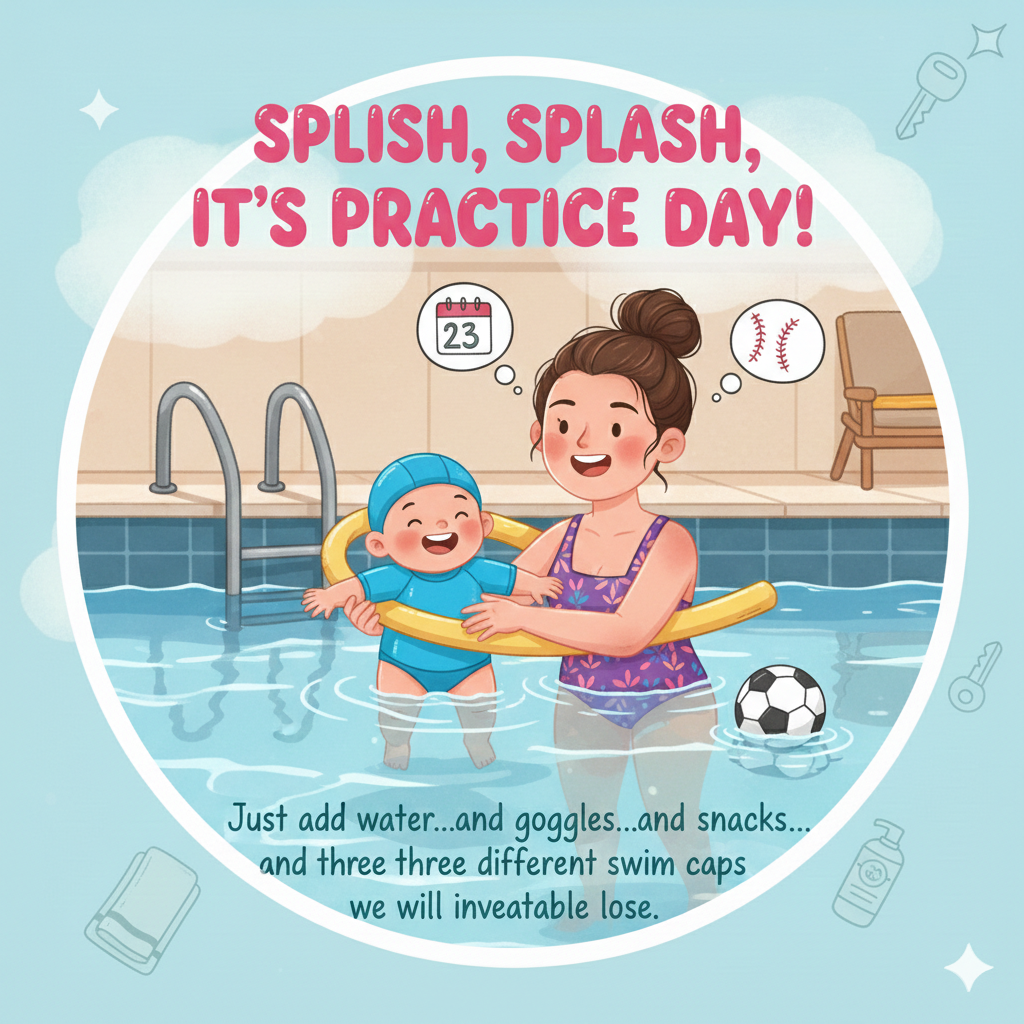
  • First Swim Lesson: How I Learned We’re All Just Swimming in Baby Pee

    First Swim Lesson: How I Learned We’re All Just Swimming in Baby Pee

    There are certain parenting milestones no one truly prepares you for.

    The first time your baby sleeps through the night.
    The first public meltdown.


    And, apparently, the first swim lesson — which is less “adorable bonding moment” and more “why are we all being observed like exotic mammals?”

    If you’ve never taken a baby or toddler to swim lessons, let me set the scene.

    You, your child, and roughly ten other parents are herded into a humid indoor pool. There is nowhere to hide. The walls are glass. People are watching. Some are smiling. Some are clearly judging your choice of swimsuit. All of them are pretending not to notice that we are collectively soaking in whatever is happening inside those tiny swim diapers.

    Welcome to swim class.

    This post contains affiliate links, which means I may earn a small commission at no cost to you. I only share products I actually use or think other parents will love.

    The Swim Diaper Delusion

    Before we even got in the water, I was confident. Prepared. Organized.

    Because I had done the thing you’re told to do.

    Double swim diapers.

    One disposable. One reusable.
    Locked. Loaded. Fort Knox, but for bodily fluids.

    I felt smug.
    I felt safe.
    I felt like a responsible adult.

    And then — within minutes of entering the pool — I had the horrifying realization that no one tells you loud enough:

    Swim diapers do not hold pee.

    Not one of them.
    Not two of them together.
    Not even if you whisper encouraging words to them.

    They are there for other things. And even then… let’s be honest… it’s a hope-and-a-prayer situation.

    So there I was, standing in chest-deep water, smiling at my kid, while my brain
    whispered:
    We are absolutely swimming in baby pee.

    Not just my baby’s.
    Everyone’s.

    Suddenly, the goggles made sense.


    The Zoo Exhibit Effect

    If the pee realization doesn’t get you, the glass walls will.

    Because swim lessons are apparently designed so spectators can watch from the outside like they’re visiting an aquarium.

    Parents. Grandparents. Random passersby.
    All pressed up against the glass.

    Watching.

    You.

    Trying to sing songs.
    Bounce your baby.
    Pretend this is normal.

    I have never felt more like a zoo animal in my life.

    Observe the First-Time Swim Parent in their natural habitat.
    Note the forced smile.
    The panic behind the eyes.
    The quiet calculation of how fast they can escape after the lesson ends.


    The Constant Fear of “The Incident”

    Every parent in that pool is carrying the same unspoken fear.

    Not drowning.
    Not splashing.

    Pooping.

    You’re smiling.
    You’re encouraging.
    But deep down, you’re watching your child like a hawk, thinking:

    Is that face concentration or is that… something else?

    Every bubble feels suspicious.
    Every pause feels dangerous.

    And yet, no one says anything.
    Because acknowledging it out loud feels like tempting fate.


    The Outfit Situation No One Warns You About

    Let’s talk swimsuits.

    Because finding a swimsuit for this phase of parenting is its own emotional journey.

    You want something:

    • Appropriate
    • Comfortable
    • Secure
    • That doesn’t make you feel like you’re wearing a costume you didn’t audition for

    You’re bending. Lifting. Holding a slippery baby.
    You don’t need straps failing or fabric shifting at the wrong moment.

    This is not the time for:

    • Anything strapless
    • Anything overly complicated
    • Anything that makes you constantly adjust

    You want functional confidence.
    “I can survive this class” energy.

    And yet, no matter what you wear, you’ll still feel a little weird — because again — glass walls.


    The 30-Minute Class That Requires an Olympic-Level Outfit Change

    For a class that lasts thirty minutes, the amount of changing involved is truly offensive.

    Wet baby.
    Wet parent.
    Tiny changing room.
    Nowhere to put anything.

    You peel off wet layers like you’re escaping a situation, not leaving a pool.

    Your baby suddenly has:

    • Zero interest in cooperating
    • Maximum interest in flailing
    • A newfound ability to turn boneless

    You leave damp.
    You smell like chlorine.
    You’re not sure if everything made it back into the bag.

    But hey — you did it.

    Emotional recovery involved:


    And Somehow… It’s Still Worth It

    Because here’s the thing.

    Even through the awkwardness.
    The pee thoughts.
    The glass walls.
    The outfit stress.

    Your kid is learning something important.

    They’re getting comfortable in the water.
    They’re building confidence.
    They’re learning trust — in you, in themselves, in their body.

    And you’re showing up.

    Even if you feel ridiculous.
    Even if you feel watched.
    Even if you spend the whole class mentally counting down until towel time.

    Sometimes parenting means doing things that feel uncomfortable for us because they’re good for them.

    Even if it means feeling like a zoo exhibit.
    Even if it means swimming in baby pee.
    Even if it means changing wet clothes for a class shorter than an episode of Bluey.


    Final Thought From the Sidelines

    You don’t have to love swim lessons.
    You don’t have to feel confident doing them.
    You just have to show up.

    Your kid won’t remember the pee.
    Or the glass walls.
    Or your internal panic.

    They’ll remember the water.
    The fun.
    And the fact that you were right there with them.

    And honestly?
    That’s a win.

    What Actually Helped

    (From One Over prepared Parent to Another)

    If you’re heading into your first swim lesson and feeling unsure, here’s what genuinely made it less chaotic for us:

    No pressure. No must-haves. Just the things that saved my sanity.

    🏊‍♀️ Your Turn:

    Did your kid love swim lessons? Hate them? Attempt a dramatic escape?
    Tell me your first swim class story — bonus points if it involves a locker room meltdown.


    Home » sports parent problems
  • About the Blog: Not a Sports Mom

    About the Blog: Not a Sports Mom

    Cheering loudly. Understanding… well, we’re working on it.

    This post contains affiliate links, which means I may earn a small commission at no cost to you. I only share products I actually use or think other parents will love.

    Welcome to Not a Sports Mom

    Welcome to Not a Sports Mom — the corner of the internet for every parent who has ever sat on a sideline thinking, “Wait… why did the ref blow the whistle this time?”

    If you’ve ever googled rules during a game, cheered at the wrong moment, or nodded along in a sideline conversation you absolutely did not understand, squinted at a field wondering what just happened, clapped a second too late, or nodded through a sideline conversation about “defense formations” you didn’t fully follow — you belong here.
    You’re in the right place.
    Actually, you’re home.


    Welcome to Not a Sports Mom

    Not a Sports Mom is a humor-filled, heart-forward space for parents raising sports-loving kids despite having zero sports background themselves. Because loving your kid and knowing the rules are two very different job descriptions.

    Here, we celebrate:

    • the chaotic charm of early-morning games
    • the confusion that comes with whistles, refs, and sports terms
    • the pride you feel watching your kid shine (even if you don’t know the score)
    • and the hilarious, relatable learning curve of becoming a “sports mom” by accident

    Grab your iced coffee, claim your sideline chair, and come laugh with the rest of us who are just doing our best out there.

    You don’t need to know the plays to show up for your kid.

    You just need a sense of humor — and maybe a snack bag.


    Hi, I’m Lisa — a proud mom, an enthusiastic cheer-er, and a deeply confused human when it comes to sports.

    I never grew up playing leagues, studying stats, or color-coding practice schedules. But here I am, raising a sports-obsessed kid whose idea of fun is talking about positions, his favorite teams and players, plays, and rules I’ve never even heard of.

    So this blog is my story:
    A mom who’s navigating youth sports with love, humor, and absolutely no clue what’s happening on the field.


    Why This Blog Exists

    Because not every mom on the sidelines grew up as an athlete.
    Because loving your kid and knowing the rules are two very different skill sets.
    And because there are millions of us out here just trying our best while pretending we understand what “offsides” means.

    Not a Sports Mom is here to:

    • make you laugh
    • make you feel seen
    • celebrate the chaos of learning sports through your kid
    • remind you that you don’t need to be a sports expert to be an amazing sports parent

    What You’ll Find Here

    Sideline Stories

    True tales of confusion, chaos, and the moments that make youth sports unforgettable.

    Beginner Guides (Written by a Beginner)

    Think: “explain it to me like I’m five,” (but my five-year-old knows more than me) but funnier.

    Sports-Mom Fails

    Because if you can’t laugh at yourself cheering for the wrong team, what can you laugh at?

    The Emotional Rollercoaster

    Pride, panic, joy, confusion — usually all within the same 60 seconds.

    Learning Moments

    Spoiler: my child teaches me more about sports than I ever taught him.


    My Philosophy

    You don’t need a background in sports to show up, support your kid, and build memories that last forever.

    You just need:

    • a folding chair that’s survived at least one season
    • a snack bag (because hunger makes everything worse)
    • sunscreen you’ll forget to apply until it’s too late
    • a willingness to embarrass yourself
    • a water bottle (for you) and your kid that actually stays cold
    • and a heart big enough to cheer even when you’re not totally sure what’s happening

    If You’re a “Not a Sports Mom” Too…

    You’re not alone.
    You’re not behind.
    And you’re definitely not doing it wrong.

    You’re just parenting in the wildest, funniest, most unexpectedly rewarding arena of all: youth sports.

    Grab a seat on the sidelines — let’s figure it out together.
    And probably laugh a whole lot along the way.

    Sideline Survival Basics (From Experience, Not Expertise)

    Over time, I’ve learned that you don’t need to know the rules — but you do need a few basics if you’re going to survive youth sports:

    • A folding chair that doesn’t dig into your legs
    • A snack bag that can handle both kids and parents
    Sunscreen, even on cloudy days. I started to keep the travel size in my car
    • A water bottle for you and for the athlete that stays cold through the second half
    • A portable phone charger, because of all the photos and videos.

    None of this makes you a sports expert — but it does make you a prepared sideline parent.

    Home » sports parent problems